
2026-09-08 · Moni Happy Mom
Baby Hair Care & Cradle Cap: A Mom's Guide to Gentle Scalp Care
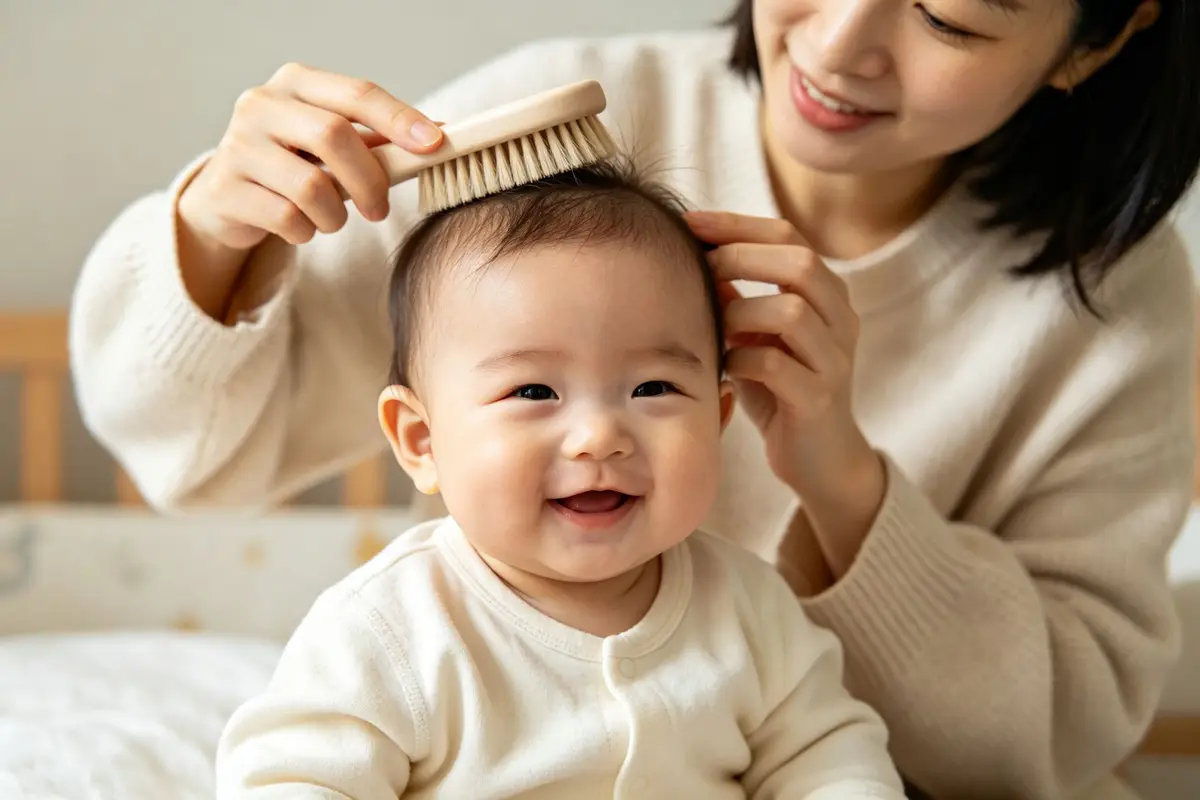
When my first baby was born, she had a full head of dark hair — and then, at around 3 months, it all fell out. I panicked. Was I doing something wrong? Was she sick? Our pediatrician laughed and told me it was completely normal — newborn hair loss happens to almost all babies, and the new hair would grow back (it did, and it was lighter and curlier than the original). Around the same time, she developed those scaly, crusty patches on her scalp that every parent recognizes as cradle cap. I had no idea how to handle it — I was afraid to touch it, afraid to scrub it, and convinced I'd damage her delicate scalp. After three kids and a lot of trial and error, here's what I've learned about baby hair care and cradle cap, from a mom who's been through it all.
Newborn Hair: What's Normal?
Before we get into hair care, let's talk about what's normal when it comes to newborn hair, because almost everything that seems alarming is actually completely normal:
- Newborn hair loss (telogen effluvium): Most babies lose some or all of their newborn hair in the first 6 months of life. This happens because the hormone levels that sustained hair growth during pregnancy drop after birth, causing the hair to enter a resting phase and then fall out. The new hair usually grows back within a few months, and it may be a different color, texture, or thickness than the original hair. My first baby went from dark, straight hair to light, wavy hair; my second went from bald to curly; my third kept most of her hair but it changed from dark to light. All normal.
- Bald spots: Many babies develop a bald spot on the back of their head from rubbing against the mattress, bouncer, or car seat. This is called positional alopecia, and it's completely normal — the hair will grow back once the baby starts sitting up and spending less time on their back. (This is different from flat head syndrome, which is about skull shape, though the two often go hand in hand.)
- Different hair textures: A baby's hair texture can change multiple times in the first year. It may be straight at birth, curly at 6 months, and something else entirely by 1 year. This is normal and is influenced by genetics and hormone levels.
- Dry scalp or flaking: Mild flaking or dryness on a baby's scalp is common and is usually just dry skin or cradle cap (more on that below). It's not a sign of poor hygiene or a serious condition.
What Is Cradle Cap?
Cradle cap (medically known as infantile seborrheic dermatitis) is a common, harmless skin condition that causes scaly, crusty, or greasy patches on a baby's scalp. It usually appears in the first few months of life and is most common between 2 weeks and 6 months of age. The patches may be white, yellow, or brown, and they can look like dandruff, thick crusty scales, or greasy, red patches. Cradle cap can also appear on other parts of the body, including the eyebrows, eyelids, ears, neck, armpits, and diaper area (where it's sometimes called "seborrheic dermatitis" rather than cradle cap).
The exact cause of cradle cap isn't fully understood, but it's believed to be related to:
- Maternal hormones: Hormones passed from mother to baby before birth can stimulate the baby's oil glands (sebaceous glands), causing excess oil production that leads to the scaling and crusting.
- A naturally occurring yeast (Malassezia): This yeast lives on the skin of most people without causing problems, but in some babies it may contribute to the inflammation and scaling of cradle cap.
- Immature skin barrier: A baby's skin is still developing, and the skin barrier may be more permeable and sensitive, making it more susceptible to conditions like cradle cap.
Cradle cap is not contagious, not caused by poor hygiene, not an allergy, and not a sign of a serious illness. It's usually not itchy or uncomfortable for the baby (unlike eczema, which is often very itchy). Most cases of cradle cap resolve on their own within a few months, though it can sometimes persist for up to a year or longer. With all three of my kids, cradle cap appeared around 2-3 months, peaked around 4-5 months, and was mostly gone by 8-9 months — though my second baby had it persist until about a year.
How to Treat Cradle Cap
In most cases, cradle cap doesn't require medical treatment and can be managed with gentle home care. Here's what our pediatrician recommended and what worked for us:
1. Gentle Shampooing
Washing your baby's hair with a gentle, fragrance-free baby shampoo 2-3 times a week can help loosen and remove the scales. Use a small amount of shampoo, gently massage it into the scalp with your fingertips (or a soft baby brush), and rinse thoroughly. Avoid scrubbing hard — be gentle, as the scalp is delicate. We used a soft washcloth to gently rinse the hair and scalp, being careful not to get shampoo in the baby's eyes. Some parents find that more frequent shampooing (daily) helps, while others find that it dries out the scalp and makes things worse — experiment to find what works for your baby.
2. Oil Treatment
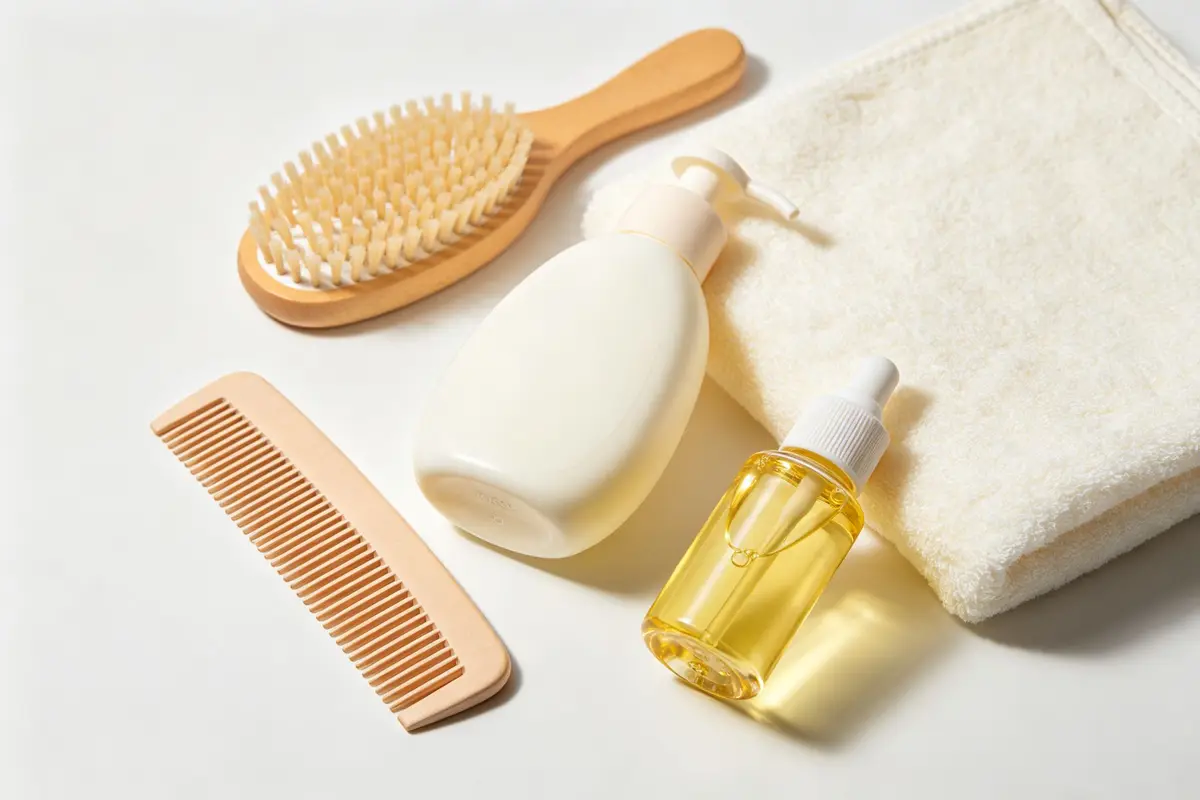
Applying a small amount of oil to the scalp can help soften and loosen the crusty scales, making them easier to remove. You can use baby oil, mineral oil, coconut oil, almond oil, or olive oil. To use: apply a small amount of oil to the affected areas, gently massage it in, and let it sit for 10-15 minutes (or overnight, for more stubborn cases). Then gently brush the scalp with a soft baby brush or comb to remove the loosened scales, and wash the hair with baby shampoo to remove the oil. We found that doing this 1-2 times a week, followed by shampooing, was effective for mild to moderate cradle cap. For our second baby, who had more stubborn cradle cap, we did the oil treatment overnight (applied oil before bed, put a soft cap on to protect the bedding, and washed it out in the morning) — this was more effective but messier. Be careful not to use too much oil, and make sure to wash it out thoroughly, as leftover oil can clog pores and make cradle cap worse.
3. Gentle Brushing
A soft baby brush (with natural bristles, if possible) can help gently remove loosened scales and stimulate the scalp. Brush your baby's hair gently in the direction of hair growth, especially after shampooing or an oil treatment. We kept a soft baby brush and a wide-tooth comb in the bathroom and used them after every bath. The brush was gentle enough for a newborn's delicate scalp, and the comb was useful for gently working through any tangles (though newborn hair is usually too fine and short to tangle). Avoid using adult hairbrushes or combs with sharp teeth, as these can scratch the baby's delicate scalp.
4. What NOT to Do
- Do not pick or scratch at the scales — this can damage the delicate scalp, cause bleeding, and lead to infection. If the scales are thick and stubborn, use the oil treatment to soften them first, then gently brush them away.
- Do not use harsh shampoos, adult dandruff shampoos (like Head & Shoulders), or medicated shampoos without your pediatrician's recommendation — these can be too harsh for a baby's delicate scalp and can cause irritation.
- Do not use essential oils (like tea tree oil) on a baby's scalp without medical guidance — some essential oils can be irritating or toxic for babies.
- Do not over-wash the hair — too much shampooing can dry out the scalp and make cradle cap worse. 2-3 times a week is usually sufficient for babies.
- Do not use hair products (gel, mousse, hairspray, etc.) on a baby's hair — these are unnecessary and can irritate the scalp.
When to See the Pediatrician
Most cases of cradle cap can be managed at home, but you should contact your pediatrician if:
- The cradle cap is severe, widespread, or not improving with home care after a few weeks
- The cradle cap is accompanied by redness, swelling, warmth, pus, or bleeding (could indicate an infection)
- The baby seems itchy or uncomfortable (could be eczema rather than cradle cap — cradle cap is usually not itchy)
- The cradle cap spreads to other parts of the body and is severe
- Your baby has a fever or seems unwell
- You're unsure whether it's cradle cap or another condition (like eczema, psoriasis, or a fungal infection)
In some cases, your pediatrician may recommend a medicated shampoo (like a mild ketoconazole shampoo) or a topical cream (like a low-strength hydrocortisone cream) for more severe or persistent cradle cap. These should only be used under medical supervision. With our second baby, we tried everything — oil treatments, frequent shampooing, gentle brushing — and the cradle cap persisted. Our pediatrician prescribed a mild medicated shampoo, and it cleared up within a couple of weeks. So if home care isn't working, don't hesitate to ask your pediatrician for help.
General Baby Hair Care Tips
Beyond cradle cap, here are some general tips for caring for your baby's hair and scalp:
- Wash hair 2-3 times a week: Babies don't need daily hair washing — 2-3 times a week is sufficient for most babies. Over-washing can dry out the scalp and hair. Use a gentle, fragrance-free, tear-free baby shampoo.
- Be gentle: A baby's scalp and hair are delicate. Use your fingertips (not nails) to massage the shampoo into the scalp, and rinse gently. Pat the hair dry with a soft towel rather than rubbing.
- Use a soft brush or wide-tooth comb: A soft baby brush or wide-tooth comb is gentle enough for a baby's fine hair and delicate scalp. Brush gently to avoid pulling or tangling.
- Don't use hair accessories that are too tight: If you use hair bows, clips, or bands, make sure they're not too tight — tight accessories can cause hair breakage or even traction alopecia (hair loss from pulling). Remove hair accessories before sleep.
- Protect from the sun: A baby's scalp is sensitive to sunburn. Use a hat with a brim when outdoors, and avoid direct sun exposure during peak hours (10 a.m. to 4 p.m.). Sunscreen is generally not recommended for babies under 6 months — use shade and protective clothing instead.
- Don't worry about hair loss or slow growth: Newborn hair loss, bald spots, and slow hair growth are all normal in the first year. Most babies have a full head of hair by their first birthday, though some take longer. Hair growth and texture are largely determined by genetics, and there's not much you can do to speed it up or change it — just be patient and gentle.
Frequently Asked Questions
Is cradle cap contagious or caused by poor hygiene?
No, cradle cap is not contagious and is not caused by poor hygiene. It's a common, harmless skin condition caused by a combination of maternal hormones stimulating the baby's oil glands, a naturally occurring yeast on the skin, and the baby's immature skin barrier. It has nothing to do with how often you wash your baby's hair or how clean your home is. Cradle cap is not an allergy, not a sign of a serious illness, and usually not itchy or uncomfortable for the baby. Most cases resolve on their own within a few months, though gentle home care can help speed up the process.
Can I pick off the cradle cap scales?
No, you should never pick or scratch at cradle cap scales. Picking can damage the baby's delicate scalp, cause bleeding, and lead to infection. If the scales are thick and stubborn, the safe way to remove them is to soften them first with an oil treatment (apply baby oil, coconut oil, or mineral oil, let it sit for 10-15 minutes or overnight), then gently brush them away with a soft baby brush or comb, followed by shampooing to remove the oil and loosened scales. Be gentle — if a scale doesn't come away easily with brushing, leave it and try again after another oil treatment. Never force it.
What's the difference between cradle cap and baby eczema?
Cradle cap (infantile seborrheic dermatitis) and baby eczema (atopic dermatitis) can look similar, but there are key differences. Cradle cap usually appears on the scalp as greasy, yellow or white scales or crusts, and is usually not itchy or uncomfortable. It may also appear on the eyebrows, ears, neck, and diaper area. Baby eczema usually appears as dry, red, itchy patches on the face (especially cheeks), elbows, knees, and scalp, and is often very itchy — babies may scratch, rub, or seem uncomfortable. Eczema may also have a family history of allergies, asthma, or eczema. If you're unsure which condition your baby has, or if the rash is itchy, red, swollen, or not improving, contact your pediatrician — the treatment for eczema is different from cradle cap, and an accurate diagnosis is important.
How often should I wash my baby's hair?
For most babies, washing hair 2-3 times a week is sufficient. Babies don't produce much oil or sweat in the first few months, and daily washing can dry out the scalp and hair, potentially making cradle cap worse. Use a gentle, fragrance-free, tear-free baby shampoo, and massage it gently into the scalp with your fingertips (not nails). If your baby has cradle cap, you may want to wash slightly more frequently (every other day) to help loosen scales, but monitor the scalp for dryness. As your baby gets older and more active (especially once they start crawling and getting into things), you may need to wash more frequently. Use your judgment — if the hair looks or feels greasy or dirty, it's time for a wash.
Article Summary
Baby hair care and cradle cap are common concerns for new parents, but most of what seems alarming is completely normal. Newborn hair loss, bald spots, and changing hair texture are all normal in the first year, driven by hormone changes and genetics. Cradle cap (infantile seborrheic dermatitis) is a common, harmless condition causing scaly, crusty patches on the scalp, usually appearing between 2 weeks and 6 months and resolving on its own within a few months. It's not contagious, not caused by poor hygiene, and usually not itchy. Gentle home care — including mild shampooing 2-3 times a week, oil treatments to soften scales, gentle brushing with a soft baby brush, and avoiding picking or harsh products — is usually effective. Contact your pediatrician for severe, persistent, or infected cradle cap, or if you're unsure whether it's cradle cap or eczema. With patience, gentle care, and time, most babies outgrow cradle cap and develop healthy, beautiful hair.