
2026-09-20 · Moni Happy Editorial
Baby Prickly Heat: Treatment and Prevention in Hot Climates
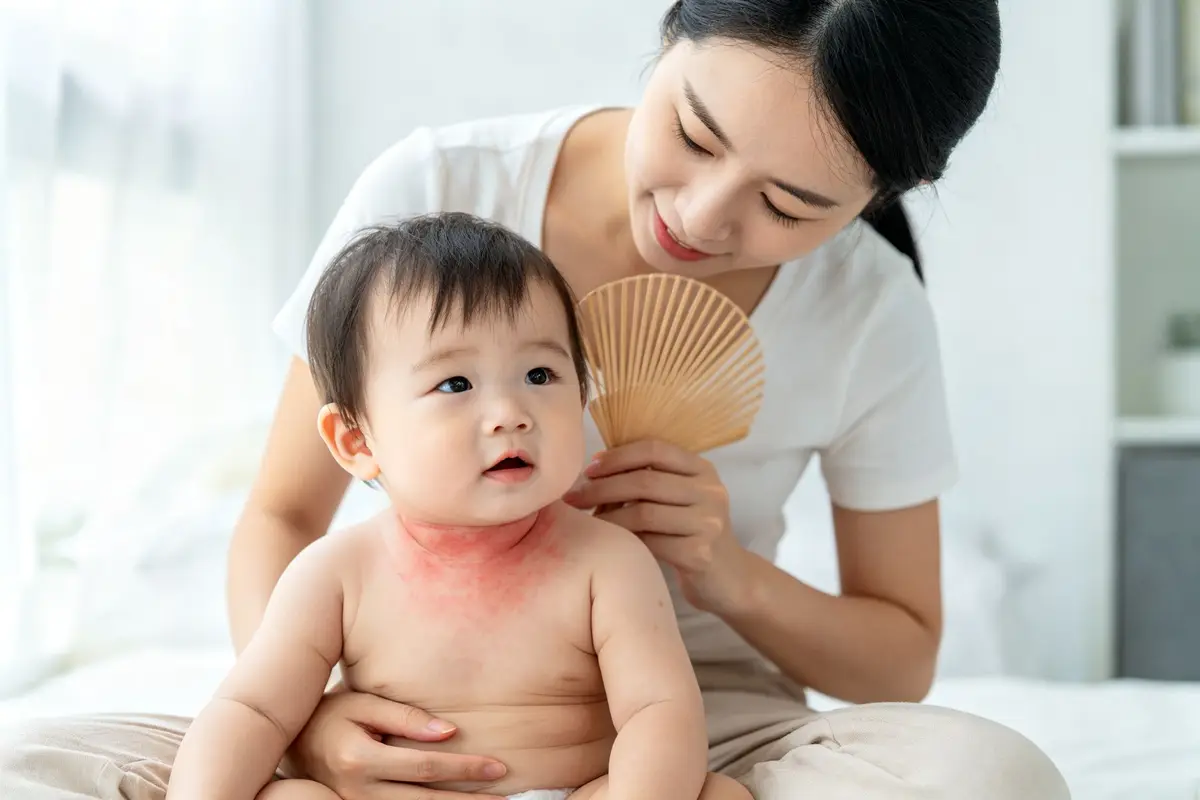
Living in a tropical climate, my baby got prickly heat before I even knew what it was. Tiny red bumps appeared on her neck, chest, and diaper area, and she was fussy and uncomfortable. I initially thought it was eczema or an allergic reaction, but our pediatrician said it was miliaria rubra — prickly heat, also known as heat rash. Here's what I learned about preventing and treating it in hot, humid weather.
What Is Prickly Heat and Why Do Babies Get It?
Prickly heat (miliaria rubra) happens when sweat glands become blocked, trapping sweat under the skin. This causes tiny red, itchy bumps that can feel prickly or stinging — hence the name. Babies are especially prone because their sweat glands are immature and more easily blocked. Hot, humid weather is the main trigger, but prickly heat can also happen when a baby is overdressed, has a fever, or is in a car seat or carrier for too long. Common areas: neck folds, armpits, elbow creases, groin, diaper area, back, and chest — anywhere skin touches skin or where clothing is tight. The bumps may be clear (miliaria crystallina, mild) or red and inflamed (miliaria rubra, more common). In severe cases, the bumps can become pus-filled (miliaria pustulosa) or lead to deeper skin inflammation.
What Actually Works for Treating and Preventing Prickly Heat
Here's what worked for us: Cool down immediately. Move baby to an air-conditioned room or use a fan. A cool (not cold) bath or wipe-down helps lower body temperature and soothes the skin. Keep skin dry and exposed. Let the affected areas air dry. Avoid tight clothing — dress baby in loose, lightweight, breathable cotton clothing. Go diaper-free when possible to let the diaper area breathe. Use a gentle, fragrance-free moisturizer. A thin layer of calamine lotion or a mild hydrocortisone cream (for severe cases, consult doctor) can soothe itching. Avoid thick ointments that can further block sweat glands. Don't use baby powder. While powder may seem drying, it can actually worsen prickly heat by further blocking sweat glands and poses an inhalation risk for babies. Prevention is key. In hot weather: dress baby in lightweight cotton, use air conditioning or fans, avoid going out during peak heat (10am-4pm), take frequent cool baths, change sweaty clothes promptly, and use breathable diapers. For diaper area care, Moni Happy's breathable diapers help reduce heat buildup. For quick cleanups, Moni Happy's wipes are convenient. What to avoid: petroleum-based ointments (they trap heat), scented lotions, tight synthetic clothing, and leaving baby in a hot car seat or carrier for extended periods.
When to Call the Doctor
Most prickly heat resolves within 2-3 days with cooling and keeping skin dry. Call your pediatrician if: the rash doesn't improve after 3 days, it's getting worse or spreading, the bumps become pus-filled, baby has a fever, baby seems in significant pain or discomfort, or you notice signs of infection (warmth, swelling, red streaks). In tropical climates like Southeast Asia, prickly heat is common but should be managed promptly to prevent secondary infection.
Frequently Asked Questions
What is prickly heat in babies?
Prickly heat (miliaria rubra) is when sweat glands become blocked, trapping sweat under the skin and causing tiny red, itchy bumps. Babies are prone because their sweat glands are immature. Triggers include hot humid weather, overdressing, fever, or prolonged time in car seats/carriers. Common areas: neck folds, armpits, groin, diaper area, and back.
How do I treat baby prickly heat?
Cool baby down immediately with air conditioning, a fan, or a cool bath. Keep affected skin dry and exposed to air. Dress in loose, breathable cotton clothing. Use a thin layer of calamine lotion for itching. Avoid thick ointments, baby powder (can block glands further), and scented products. Most resolves in 2-3 days.
How can I prevent baby prickly heat in hot weather?
Dress baby in lightweight, loose cotton clothing. Use air conditioning or fans. Avoid going out during peak heat (10am-4pm). Take frequent cool baths. Change sweaty clothes promptly. Use breathable diapers and go diaper-free when possible. Avoid prolonged time in car seats or carriers in hot weather.
When should I see a doctor about baby heat rash?
Call your pediatrician if the rash doesn't improve after 3 days, is getting worse or spreading, bumps become pus-filled, baby has a fever, seems in significant pain, or shows signs of infection like warmth, swelling, or red streaks. Most prickly heat resolves with home care, but these signs need medical attention.