
2026-09-08 · Moni Happy Mom
Baby Stranger Anxiety: What It Is & How to Help — A Mom's Guide
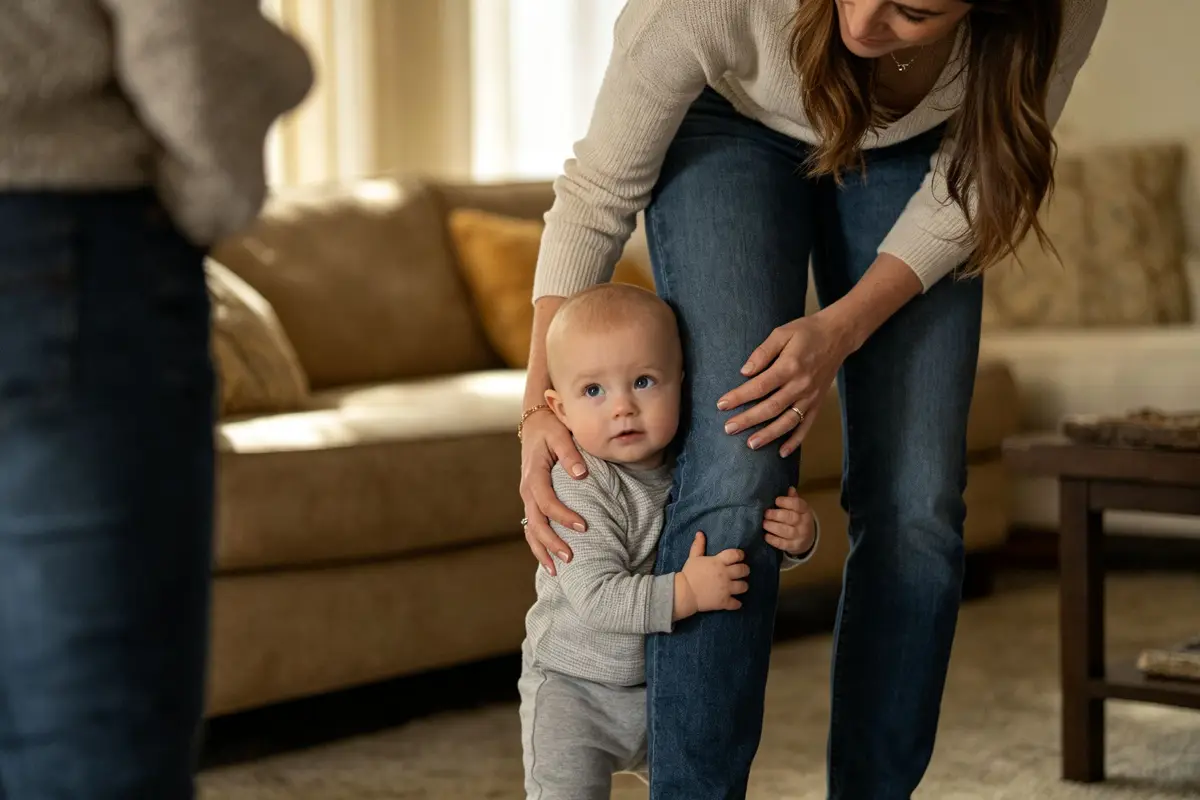
My sister came to visit when my first baby was about 7 months old, and I was so excited for them to meet. My sister reached out to hold the baby, and — boom — my daughter's face crumpled, she let out a wail, and she buried her face in my chest. My sister looked hurt, I looked embarrassed, and the baby looked terrified. I had no idea what was happening. A friend later told me it was stranger anxiety, a completely normal developmental phase that almost all babies go through. Over the next few months, I learned how to navigate it gently — and how to help my baby (and the well-meaning relatives) get through it. Here's what I've learned from three kids who each went through stranger anxiety in their own way.
What Is Stranger Anxiety?
Stranger anxiety is a normal developmental phase where babies become wary or fearful of people they don't know well. It typically begins around 6-9 months of age, as babies develop object permanence (the understanding that people continue to exist even when they're out of sight) and can distinguish between familiar and unfamiliar faces. Before this age, most babies are relatively easygoing about who holds them — they may smile at anyone and seem happy to be passed around. But as their cognitive and social development advances, they begin to prefer familiar caregivers and may react with crying, fussing, or clinging when approached by someone new.
Stranger anxiety is different from separation anxiety, though they often overlap. Separation anxiety is distress when a primary caregiver leaves the room or is out of sight, while stranger anxiety is wariness of unfamiliar people. Both typically emerge around the same age (6-12 months) and are signs of healthy cognitive and emotional development. Stranger anxiety usually peaks between 9-18 months and gradually fades as the baby approaches toddlerhood, though some children continue to be shy or cautious around new people well into childhood — and that's perfectly fine too. It's a personality trait, not a flaw.
What Does Stranger Anxiety Look Like?
Every baby expresses stranger anxiety differently, but common signs include:
- Crying or fussing when a stranger approaches or tries to hold them
- Burrowing into the parent's chest or shoulder, hiding their face
- Becoming very quiet and still, staring warily at the stranger
- Refusing to make eye contact with unfamiliar people
- Reaching for the parent and clinging tightly when a stranger is near
- Waking more frequently at night or being more clingy than usual during periods of heightened anxiety (like after a big social event or a change in routine)
Some babies have mild stranger anxiety — they may just be quiet or cautious around new people but warm up after a few minutes. Others have more intense reactions, screaming and clinging at the mere approach of a stranger. Both are normal. With my first baby, stranger anxiety was intense — she'd scream if anyone besides me or my husband looked at her too long. My second baby was more mild — she'd cling but would eventually warm up if given time. My third baby was somewhere in between. There's no "right" way for a baby to experience stranger anxiety, and the intensity doesn't predict anything about their future personality or social skills.
How Can I Help My Baby Through Stranger Anxiety?
The most important thing is to respect your baby's feelings and not force them into uncomfortable situations. Here's what worked for us and what child development experts recommend:
1. Don't Force It
This is the single most important rule. Never force your baby to go to a stranger, or hand them off to someone they're clearly uncomfortable with, even if it's a well-meaning relative who "just wants a cuddle." Forcing interaction can make the anxiety worse and erode your baby's trust that you'll keep them safe. Instead, hold your baby and let them observe the new person from the safety of your arms. You can say something like, "She's a little shy right now, but she'll warm up — let's just hang out together for a bit." This validates your baby's feelings and sets a gentle expectation without pressure.
2. Prepare New People in Advance
Before a visit or social gathering, let the new person know that your baby is going through a shy phase and may need time to warm up. Give them specific guidance: don't reach for the baby right away, don't make direct eye contact or talk in a loud voice initially, and let the baby approach on their own terms. Suggest that they sit nearby and talk to you, or play with a toy quietly, so the baby can observe them without feeling pressured. We found that giving relatives a "script" — "just sit next to me and talk to me for a while, don't look at her directly, and she'll probably come around" — made a huge difference. It took the pressure off everyone and helped the baby feel safe.
3. Let Your Baby Set the Pace
Every baby warms up at their own speed. Some may take 10-15 minutes of observation before they're ready to interact, while others may need an entire visit (or several visits) before they're comfortable. Let your baby lead — if they reach for the new person, great; if they cling to you, that's fine too. You can encourage gentle interaction by holding a toy and offering it to the new person to play with, or by doing a fun activity (like peekaboo or singing) that the baby enjoys, with the new person participating from a distance. Gradually, as the baby becomes more comfortable, the new person can move closer and participate more directly. We kept a favorite toy or comfort object handy during social visits to give our baby something familiar to hold onto, which seemed to help.
4. Stay Calm and Positive
Your baby takes emotional cues from you. If you seem anxious, embarrassed, or frustrated by their reaction, they'll pick up on that and feel more anxious. Stay calm, smile, and speak in a relaxed, positive tone. You can say things like, "It's okay, Mommy's here. Auntie is nice. We can say hi when you're ready." Don't apologize excessively for your baby's behavior — it's a normal phase, and there's nothing to apologize for. You can simply say, "She's going through a shy phase right now — she'll warm up!" and move on. This models confidence and helps the new person understand that it's not personal.
5. Gradual Exposure
Regular, gentle exposure to new people in low-pressure settings can help your baby become more comfortable over time. Short, frequent visits with one or two new people are better than long, overwhelming gatherings with a crowd. Playdates with other babies and their parents, visits to family members, and trips to places like the library or playground (where there are other people around but no direct pressure to interact) can all help. The key is to keep it low-pressure and let your baby observe and participate at their own pace. We found that regular weekly playdates with the same group of moms and babies helped our babies become more comfortable with new people over time, because the exposure was consistent and low-pressure.
6. Don't Label Your Baby as "Shy"
Avoid calling your baby "shy" in front of them or others, even in a loving way. Labels can stick and can become a self-fulfilling prophecy — if a child is repeatedly told they're shy, they may begin to identify as shy and avoid social situations even after the stranger anxiety phase has passed. Instead, describe the behavior neutrally: "She's taking her time to get to know you," or "She likes to observe before she warms up." This frames the behavior as a temporary, situational response rather than a fixed personality trait.
When Should I Worry?
Stranger anxiety is a normal part of development, but there are some situations where it's worth discussing with your pediatrician:
- If your baby's anxiety is so severe that it prevents them from participating in daily activities or causes significant distress for the family
- If stranger anxiety persists well beyond the typical age range (beyond 2-3 years) and is accompanied by other social or developmental concerns
- If your baby doesn't show a preference for familiar caregivers (doesn't seem to distinguish between parents and strangers) — this could be a sign of a developmental concern
- If your baby shows no interest in social interaction at all, even with familiar people
- If you have concerns about your baby's hearing, vision, or overall development
In most cases, stranger anxiety is a passing phase that resolves as your baby grows and becomes more confident. With patience, respect, and gentle guidance, your baby will learn that new people aren't so scary — and that you'll always be there to keep them safe. With all three of my kids, the stranger anxiety phase eventually passed, and they grew into social, friendly kids (though my firstborn is still a bit cautious in new situations, which I think is actually a good quality). Be patient, be kind to yourself and your baby, and remember — this too shall pass.
Frequently Asked Questions
When does stranger anxiety start and how long does it last?
Stranger anxiety typically begins around 6-9 months of age, as babies develop object permanence and can distinguish familiar from unfamiliar faces. It usually peaks between 9-18 months and gradually fades as the baby approaches toddlerhood (around 2 years). However, every baby is different — some have mild, short-lived stranger anxiety, while others are more cautious for longer. Some children continue to be shy or slow to warm up in new situations well into childhood, which is a normal personality trait rather than a problem. The key is that the anxiety gradually decreases over time and doesn't prevent the child from forming relationships or participating in activities.
Is stranger anxiety a sign of autism?
No, stranger anxiety alone is not a sign of autism. In fact, stranger anxiety is a sign of typical social and cognitive development — it shows that the baby can distinguish between familiar and unfamiliar people and has formed attachments to their caregivers. Autism is characterized by a broader pattern of social communication differences, including reduced eye contact, delayed or absent speech, lack of response to their name, limited pretend play, and repetitive behaviors. If your baby shows stranger anxiety but also makes eye contact, responds to their name, babbles and interacts with familiar people, and reaches developmental milestones, there's likely no cause for concern. If you have questions about your baby's development, talk to your pediatrician.
How do I handle relatives who insist on holding my baby?
This can be tricky, especially with well-meaning grandparents or relatives who feel hurt by the baby's reaction. The key is to be firm but kind. You can say something like, "I know you want to hold her, but she's going through a shy phase right now, and forcing it will just make her more upset. Let's let her warm up on her own — she'll come around, and then she'll be all over you!" You can also suggest alternative ways for the relative to bond: they can sit nearby and talk to the baby, play with a toy, or sing a song from a distance. Over time, as the baby becomes more familiar with the relative, they'll likely become more comfortable. It may help to have shorter, more frequent visits rather than long, infrequent ones, so the baby has more opportunities to get to know the relative in low-pressure settings.
Can I prevent stranger anxiety?
You can't prevent stranger anxiety — it's a normal, universal developmental phase that almost all babies go through, regardless of how social they are or how much exposure they have to new people. However, you can help your baby navigate it more smoothly by: respecting their feelings and not forcing interaction; preparing new people in advance; letting your baby set the pace; staying calm and positive; providing regular, low-pressure exposure to new people; and offering comfort and reassurance when they're anxious. Some babies are naturally more cautious than others, and that's okay — it's a temperament trait, not something you caused or can change. The goal isn't to eliminate stranger anxiety but to help your baby feel safe and supported as they learn to navigate social situations.
Article Summary
Stranger anxiety is a normal developmental phase that typically begins around 6-9 months, peaks at 9-18 months, and gradually fades by toddlerhood. It emerges as babies develop object permanence and can distinguish familiar from unfamiliar faces, and it's a sign of healthy cognitive and social development. Babies may cry, cling, hide, or become quiet around strangers, and the intensity varies from baby to baby. The most helpful approach is to respect your baby's feelings, never force interaction, prepare new people in advance, let your baby set the pace, stay calm and positive, and provide regular low-pressure exposure to new people. Avoid labeling your baby as "shy," and remember that this phase is temporary. Contact your pediatrician if anxiety is extremely severe, persists beyond the typical age range, or is accompanied by other developmental concerns. With patience and gentle guidance, most babies navigate stranger anxiety successfully and grow into confident social beings.