
2026-09-04 · Moni Happy Editorial Team
Baby Sun Safety & Sunscreen Guide: A Mom's Complete Guide to Protecting Your Baby's Skin
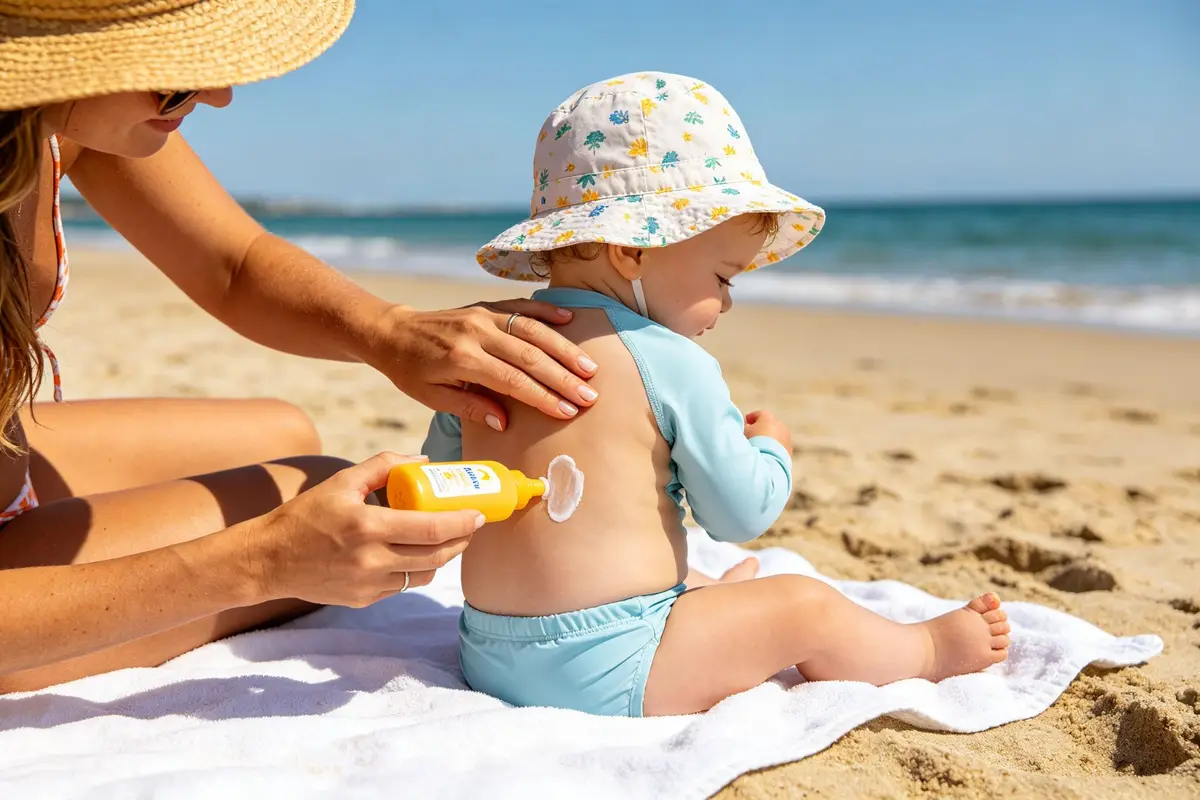
Baby Sun Safety & Sunscreen Guide: A Mom's Complete Guide to Protecting Your Baby's Skin
My first baby got a sunburn at 4 months old. We were at a family barbecue, I thought she was in the shade under the tree, and I didn't realize how much indirect UV light was reflecting off the patio. By evening, her little cheeks and arms were bright red and she was miserable. I felt like the worst mom in the world. The pediatrician told me that baby skin is incredibly sensitive—up to 10 times thinner than adult skin—and that even one blistering sunburn in childhood doubles the risk of melanoma later in life. That day changed everything about how I approach sun safety with my kids. After three babies and countless beach trips, park visits, and pool days, here's everything I've learned about protecting your baby's delicate skin from the sun.
Why Baby Skin Needs Extra Sun Protection
Baby skin is fundamentally different from adult skin, and this makes it much more vulnerable to sun damage:
- Thinner skin: A baby's epidermis (outer skin layer) is up to 30% thinner than an adult's, and the dermis (deeper layer) is also thinner. This means UV rays penetrate more deeply and cause more damage with less exposure time.
- Less melanin: Melanin is the pigment that protects skin from UV damage. Babies have less melanin than adults (even babies with darker skin tones), making them more susceptible to sunburn and UV damage. A baby can start to burn in as little as 10-15 minutes of unprotected sun exposure, even on cloudy days.
- Immature skin barrier: A baby's skin barrier (the outermost layer that locks in moisture and keeps out irritants) is still developing in the first year. This makes baby skin more permeable—ingredients in sunscreen and other products are absorbed more readily, which is why choosing the right sunscreen matters.
- Limited ability to regulate temperature: Babies can't regulate their body temperature as well as adults, making them more susceptible to heat exhaustion and heat stroke in hot, sunny conditions. They also dehydrate more quickly.
- Long-term risk: Research shows that just one blistering sunburn in childhood or adolescence doubles the risk of developing melanoma (the deadliest form of skin cancer) later in life. And cumulative sun exposure in childhood contributes significantly to skin aging and skin cancer risk. Protecting your baby's skin now has lifelong benefits.
UV levels matter: UV radiation is strongest between 10 AM and 4 PM (especially 11 AM-3 PM), at higher altitudes, near reflective surfaces (water, sand, snow, concrete—these can reflect up to 80% of UV rays), and during summer months. But UV rays can damage skin even on cloudy, overcast days (up to 80% of UV rays pass through clouds) and through window glass (UVA rays penetrate glass, so your baby can get sun exposure through a car or house window). The UV Index (available on weather apps) tells you the daily UV risk—when it's 3 or above, sun protection is needed. When it's 8 or above, it's best to stay indoors during peak hours.
Sun Protection for Babies Under 6 Months
The American Academy of Pediatrics (AAP) has specific guidelines for babies under 6 months, because their skin is so thin and sensitive and sunscreen ingredients may be absorbed more readily:
- Avoid direct sun exposure as much as possible: For babies under 6 months, the AAP recommends keeping them out of direct sunlight entirely. This doesn't mean you can't go outside—it means you should keep your baby in shade (under a tree, umbrella, stroller canopy, or covered porch) and avoid being outside during peak UV hours (10 AM-4 PM) when possible.
- Sunscreen on small areas only (if unavoidable): The AAP says that if adequate clothing and shade aren't available, parents can apply a small amount of mineral sunscreen (zinc oxide or titanium dioxide, SPF 30+) to small areas of exposed skin, such as the face, ears, neck, and backs of the hands. Avoid applying sunscreen to large areas of a young baby's body, and avoid the hands (they put them in their mouth). If you do use sunscreen on a baby under 6 months, do a patch test first: apply a small amount to the inner forearm 24-48 hours before full use to check for allergic reaction.
- Protective clothing is the first line of defense: Dress your baby in lightweight, long-sleeved shirts and long pants (or a one-piece UV-protective suit), a wide-brimmed hat that shades the face, neck, and ears, and UV-protective sunglasses if your baby will keep them on. Look for clothing with a UPF (Ultraviolet Protection Factor) rating of 30+ (UPF 50+ is best)—this means the fabric blocks 97.5%+ of UV rays. Tight-weave, dark-colored, or specially treated fabrics offer more protection than thin, light-colored, loosely woven fabrics.
- Stroller and carrier sun protection: Use a stroller with a full canopy or attach a UV-protective stroller cover/parasol. Make sure there's adequate airflow under the cover—don't completely enclose the stroller with a blanket or cover, as this can cause overheating (temperatures inside a covered stroller can rise dangerously). Use a mesh or UV-protective cover that allows airflow. For baby carriers, use a carrier with a hood or attach a sun hat, and apply sunscreen to exposed areas.
- Shade is your best friend: Use a beach umbrella, pop-up tent, or shade canopy at the beach/park. Bring a portable shade structure (like a baby beach tent) so you always have shade wherever you go. Remember that shade under a tree or umbrella still allows some indirect and reflected UV, so sunscreen and protective clothing are still needed.
- Hydration and temperature: Keep your baby cool and hydrated. For breastfed/formula-fed babies under 6 months, offer extra breast milk or formula feeds in hot weather (water is not recommended for babies under 6 months unless specifically advised by a doctor). Watch for signs of overheating: flushed skin, rapid breathing, excessive sweating (though babies may not sweat much), lethargy, or a fever. If your baby seems overheated, move to a cooler area, remove extra layers, and offer fluids.
Choosing the Right Sunscreen for Your Baby
For babies 6 months and older, sunscreen is an essential part of sun protection (along with clothing, hats, shade, and avoiding peak hours). Here's how to choose a safe, effective baby sunscreen:
1. Choose mineral (physical) sunscreen, not chemical:
- Mineral sunscreens (also called physical sunscreens) use active ingredients zinc oxide and/or titanium dioxide. These work by sitting on top of the skin and physically reflecting/scattering UV rays, like tiny mirrors. They're less likely to cause skin irritation or allergic reactions, they start working immediately (no waiting 15-20 minutes), and they're generally considered the safest choice for babies and children with sensitive skin. Zinc oxide provides broad-spectrum protection (both UVA and UVB) and is the most photostable sunscreen ingredient available.
- Chemical sunscreens use ingredients like oxybenzone, avobenzone, octinoxate, octisalate, homosalate, and octocrylene. These work by absorbing UV rays and converting them to heat, which is then released from the skin. Chemical sunscreens are more likely to cause skin irritation and allergic reactions, some ingredients (like oxybenzone) are potential hormone disruptors and have been banned in some places (Hawaii, Key West, Palau) due to coral reef toxicity, and they need to be applied 15-20 minutes before sun exposure to work. The AAP and pediatric dermatologists generally recommend mineral sunscreens for babies and young children.
2. Look for broad-spectrum protection:
- "Broad-spectrum" means the sunscreen protects against both UVA rays (which cause skin aging, wrinkles, and contribute to skin cancer) and UVB rays (which cause sunburn and are the primary cause of skin cancer). If a sunscreen isn't labeled "broad-spectrum," it only protects against UVB (sunburn) but not UVA (long-term damage). Always choose broad-spectrum.
3. SPF 30 or higher:
- SPF (Sun Protection Factor) measures how well the sunscreen protects against UVB rays. SPF 15 blocks about 93% of UVB, SPF 30 blocks about 97%, SPF 50 blocks about 98%, and SPF 100 blocks about 99%. The AAP recommends SPF 30 or higher for babies and children. SPF 30 is sufficient for most daily use; SPF 50+ is good for extended outdoor activity, beach/pool days, or for babies with very fair skin. Higher SPF doesn't mean you can stay out longer without reapplying—you still need to reapply every 2 hours (or after swimming/sweating).
- Note: No sunscreen blocks 100% of UV rays, and sunscreen should always be used in combination with clothing, hats, shade, and avoiding peak hours—not as the sole method of protection.
4. Water-resistant for swimming/sweating:
- If your baby will be swimming, sweating heavily, or toweling off, choose a water-resistant sunscreen. Water-resistant sunscreens are tested to maintain their SPF for 40 or 80 minutes in water (check the label). "Waterproof" no longer appears on sunscreen labels (the FDA banned this term because no sunscreen is truly waterproof). Even water-resistant sunscreen needs to be reapplied after swimming/toweling off.
5. Choose the right format:
- Lotions/creams: The most common and easiest to apply evenly. Look for a thick, white cream (mineral sunscreens are naturally white) that spreads easily. Lotions are good for full-body application.
- Sticks: Great for targeted application on the face, ears, nose, and around the eyes (less likely to get in eyes). Easy to carry in a diaper bag. Make sure to apply a thick, even layer—sticks can be applied too thinly if you just swipe once.
- Sprays: Convenient but harder to apply evenly (risk of missed spots), and there's concern about inhalation of spray particles (especially for babies and children). The AAP and FDA caution against using spray sunscreen on children under 18 due to inhalation risk. If you do use a spray, spray it into your hands first and then apply to your baby's skin (don't spray directly on the face), and avoid spraying near the face/inhalation.
- Tinted mineral sunscreens: Some mineral sunscreens come with a slight tint (skin-colored) to reduce the white cast that zinc oxide can leave. These can be good for older babies/toddlers who don't like the white look, but for babies, the white cast is fine and even helps you see where you've applied (so you don't miss spots).
6. Avoid these ingredients:
- Oxybenzone (potential hormone disruptor, coral reef toxin, common allergen)
- Retinyl palmitate / retinol / vitamin A (may increase skin sensitivity to sun)
- Fragrance / parfum (common irritant for baby skin)
- Chemical filters in general for babies under 2 years (stick to mineral zinc oxide/titanium dioxide)
- Alcohol (can be drying and irritating)
7. Do a patch test: Before using any new sunscreen on your baby, apply a small amount to the inner forearm or behind the ear, wait 24-48 hours, and check for redness, rash, or irritation. If there's a reaction, try a different brand or formula. Babies with eczema or very sensitive skin may need a fragrance-free, hypoallergenic mineral sunscreen with minimal ingredients.
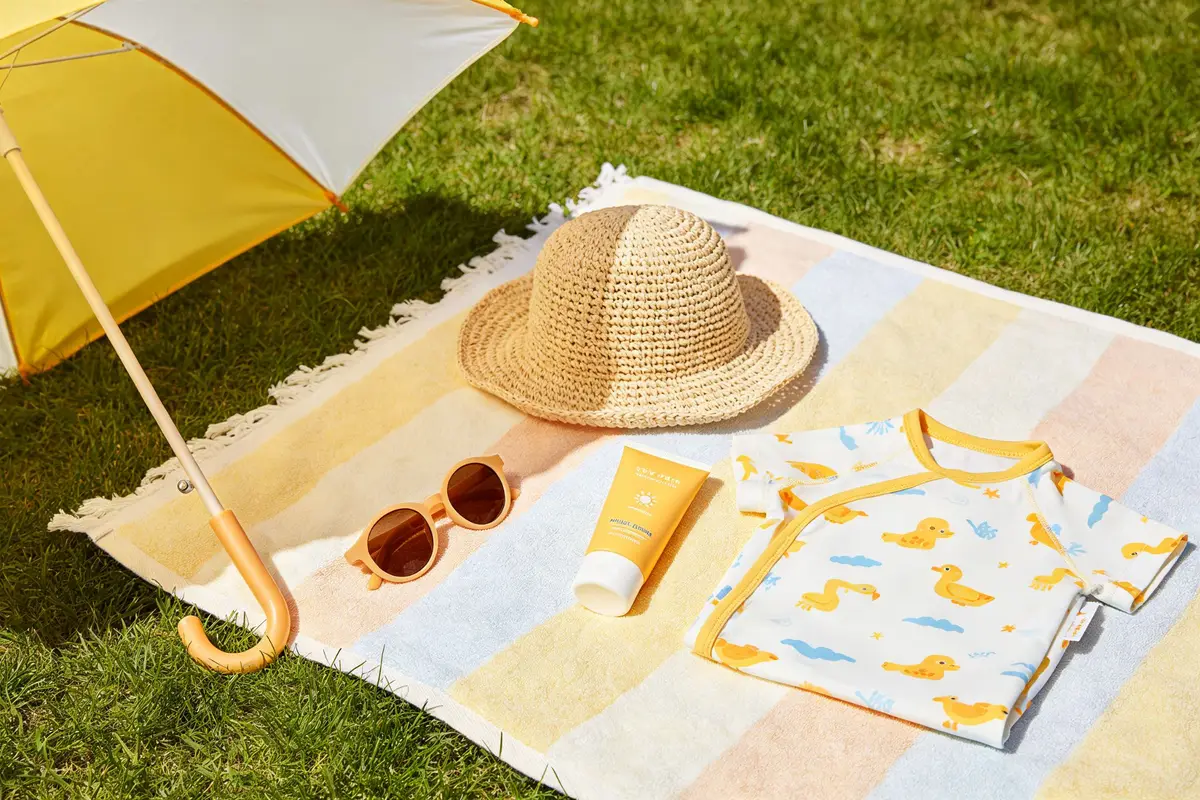
How to Apply Sunscreen Correctly
Applying sunscreen correctly is just as important as choosing the right one. Most people apply too little, which significantly reduces the effective SPF. Here's how to do it right:
- Apply 15-20 minutes before going outside: While mineral sunscreens start working immediately, applying ahead of time gives the product time to adhere to the skin and ensures even coverage. For chemical sunscreens, 15-20 minutes is required for activation.
- Use enough product: Most adults need about 1 ounce (a shot glass full) for full-body coverage. For a baby, use about 1-2 teaspoons for the face and neck, and more for the body. A general rule: apply a thick, visible layer—if it rubs in completely and invisibly, you're probably using too little. Mineral sunscreens should leave a slight white cast, which is normal and helps you see coverage.
- Cover all exposed areas: Don't forget commonly missed spots: the ears (top and back), back of the neck, scalp (part line, especially if baby has thin hair—use a hat for extra protection), tops of feet, back of hands, and around the eyes (be careful not to get sunscreen in the eyes—use a stick for around the eyes and a hat for shade). For babies, apply to the face, ears, neck, hands, and any skin not covered by clothing.
- Avoid the eye area and mouth: Don't apply sunscreen directly to the eyelids or inside the eyes. Use a hat with a brim for eye protection, and UV-protective sunglasses if your baby will keep them on. Avoid the lips (use a lip balm with SPF for older babies/toddlers, but for young babies, just keep them in shade and use a hat). If sunscreen gets in your baby's eyes, flush with water and use a gentle, tear-free formula next time.
- Reapply every 2 hours: No sunscreen lasts all day. Reapply every 2 hours, or more frequently if your baby is swimming, sweating, or toweling off. Set a timer on your phone to remind yourself—it's easy to lose track of time at the beach or park.
- Reapply after swimming/sweating/toweling: Even water-resistant sunscreen needs to be reapplied after swimming (after 40 or 80 minutes in water, depending on the label), excessive sweating, or toweling dry. Toweling off removes sunscreen, so always reapply after drying off.
- Don't rely on sunscreen alone: Sunscreen should be used in combination with protective clothing (UPF 30+), a wide-brimmed hat, UV sunglasses, shade (umbrella/tent/tree), and avoiding peak UV hours (10 AM-4 PM). The most effective sun protection is a combination of all these methods—not just sunscreen.
- Check expiration dates: Sunscreen does expire (usually 3 years from manufacture, or check the expiration date on the bottle). Expired sunscreen may be less effective or have degraded ingredients. If the sunscreen has changed color, consistency, or smell, throw it away and buy a new one.
- Store sunscreen properly: Keep sunscreen in a cool, dry place—don't leave it in a hot car or in direct sun, as high temperatures can degrade the active ingredients and reduce effectiveness. If you're at the beach/pool, keep the sunscreen in a cooler or shaded bag.
What to Do If Your Baby Gets a Sunburn
Despite your best efforts, sunburns can happen. Here's what to do:
- Get out of the sun immediately: Move your baby to shade or indoors as soon as you notice redness or suspect a sunburn.
- Cool the skin: Apply a cool (not cold) compress to the burned area for 10-15 minutes at a time, several times a day. You can use a clean washcloth soaked in cool water, or give your baby a cool (not cold) bath. Avoid ice or very cold water, which can further damage the skin.
- Hydrate: Sunburn draws fluid to the skin surface and away from the rest of the body, increasing the risk of dehydration. Offer extra breast milk, formula, or (for babies 6+ months) water. Watch for signs of dehydration: fewer wet diapers, dry mouth, no tears, lethargy.
- Moisturize: Apply a gentle, fragrance-free, hypoallergenic moisturizer (like aloe vera gel or a baby-safe lotion) to soothe the skin and prevent peeling. Avoid products with alcohol, fragrance, or benzocaine (which can cause allergic reactions in babies). For mild burns, a cool bath followed by moisturizer is usually sufficient.
- Pain relief: If your baby seems uncomfortable or in pain, you can give acetaminophen (paracetamol) for babies 2+ months, or ibuprofen for babies 6+ months, dosed by weight. Check with your pediatrician for the correct dose. Never give aspirin to a baby (Reye's syndrome risk).
- Don't pop blisters: If the sunburn blisters, it's a second-degree burn. Don't pop or break the blisters—they protect the underlying skin and prevent infection. If blisters are large, in a sensitive area, or your baby seems in significant pain, call your pediatrician.
- When to call the doctor: Call your pediatrician immediately if: your baby is under 6 months and has any sunburn (even mild—young babies need medical evaluation for sunburn); the sunburn is severe (blistering, widespread, very red/swollen); your baby has a fever (temperature 38°C/100.4°F or higher); your baby shows signs of dehydration (fewer wet diapers, no tears, dry mouth, lethargy, sunken fontanelle); your baby seems very lethargic, confused, or difficult to wake; your baby has chills, headache, or seems in severe pain; the sunburn shows signs of infection (increasing redness, warmth, pus, streaking); or your baby has signs of heat stroke (high fever, hot dry skin, rapid breathing, confusion, lethargy, vomiting). For babies under 1 year, any significant sunburn should be evaluated by a pediatrician.
- Prevention for next time: After a sunburn, your baby's skin will be more sensitive to sun for several weeks. Be extra vigilant about sun protection (clothing, hat, shade, sunscreen) and avoid peak UV hours until the skin has fully healed. A single blistering sunburn in childhood doubles melanoma risk, so take it seriously and step up your protection game.
Article Summary
Baby skin is up to 30% thinner than adult skin, has less melanin, and an immature barrier, making it far more vulnerable to UV damage—a baby can start burning in just 10-15 minutes of unprotected sun, even on cloudy days, and one blistering childhood sunburn doubles lifetime melanoma risk. For babies under 6 months, the AAP recommends avoiding direct sun entirely: keep them in shade (umbrella, tree, stroller canopy, pop-up tent), dress in lightweight long sleeves/pants with UPF 30+ rating, a wide-brimmed hat, and UV sunglasses, and only apply a small amount of mineral sunscreen (zinc oxide/titanium dioxide, SPF 30+) to small exposed areas (face, ears, neck, hands) if shade/clothing aren't available—do a patch test first. For babies 6+ months, sunscreen is essential but should always be combined with clothing, hats, shade, and avoiding peak UV hours (10 AM-4 PM). Choose a mineral (physical) sunscreen with zinc oxide and/or titanium dioxide (not chemical filters like oxybenzone), broad-spectrum (UVA+UVB) protection, SPF 30 or higher (SPF 50+ for beach/extended outdoor), water-resistant (40 or 80 min) for swimming/sweating, and a lotion or stick format (avoid sprays for babies due to inhalation risk). Avoid fragrance, alcohol, retinyl palmitate, and oxybenzone. Apply 15-20 minutes before going out, use enough product (thick visible layer—mineral sunscreen should leave a slight white cast), cover all exposed areas including commonly missed spots (ears, neck, scalp, tops of feet, hands), avoid eyes/mouth, reapply every 2 hours (or after swimming/sweating/toweling), and don't rely on sunscreen alone. If a sunburn occurs: get out of sun immediately, cool the skin with cool compresses/baths, hydrate with extra fluids, moisturize with fragrance-free lotion/aloe, give acetaminophen (2+ months) or ibuprofen (6+ months) for pain if needed, don't pop blisters, and call the pediatrician for any sunburn in a baby under 6 months, severe/blistering burns, fever, dehydration signs, lethargy, or signs of infection/heat stroke. Sun safety is a lifelong habit—starting early protects your baby's skin now and reduces their lifetime risk of skin cancer and premature aging. With the right combination of shade, clothing, hats, and sunscreen, you can enjoy the outdoors safely with your baby. For more baby health and safety guides, see our baby skin care guide and explore Moni Happy baby care products.
Frequently Asked Questions
What are the most important baby safety tips for the home?
Key home safety tips include: put your baby to sleep on their back in a crib with a firm mattress and no loose bedding, pillows, or stuffed animals; install smoke and carbon monoxide detectors; cover electrical outlets; secure heavy furniture and TVs to the wall; use safety gates at the top and bottom of stairs; keep small objects, choking hazards, and toxic substances out of reach; and never leave your baby unattended on a high surface like a changing table or bed.
How do I baby-proof each room?
In the nursery: secure the dresser, use cordless window coverings, and keep the crib bare. In the bathroom: set the water heater to 120°F (49°C), use toilet locks, and store medications and cleaning products out of reach. In the kitchen: use stove knob covers, keep sharp objects and hot items away from edges, and use cabinet locks. In the living room: anchor furniture, cover sharp corners, and secure window blind cords. Do a room-by-room crawl at your baby's eye level to spot hazards.
Is it safe to use secondhand baby gear?
Some secondhand gear is safe, but always check for recalls and expiration dates. Car seats should never be used if they're expired, were in a crash, or are missing parts — when in doubt, buy new. Cribs should meet current safety standards (no drop-side rails, slats no more than 2 3/8 inches apart). High chairs, strollers, and play yards are generally safe secondhand if they're clean, intact, and not recalled. Always clean secondhand items thoroughly before use.
What should be in my baby first aid kit?
A basic baby first aid kit should include: infant acetaminophen (and ibuprofen for 6 months+), digital thermometer, nasal aspirator, saline drops, tweezers, bandages in various sizes, antiseptic wipes, gauze pads, medical tape, scissors with rounded tips, a bulb syringe, oral medicine syringe, instant cold pack, and a first aid guide. Keep the kit in a designated place that's out of children's reach but easily accessible to adults. Check expiration dates regularly and replace items as needed.
Frequently Asked Questions
When can I start using sunscreen on my baby and what type is safest?
The American Academy of Pediatrics (AAP) has specific age-based guidelines for sunscreen use in babies: For babies UNDER 6 MONTHS: The AAP recommends keeping babies under 6 months out of direct sunlight entirely, as their skin is up to 30% thinner than adult skin, has less melanin, and an immature barrier that absorbs ingredients more readily. The first line of defense is shade (umbrella, tree, stroller canopy, pop-up tent), protective clothing (lightweight long sleeves/pants, UPF 30+), a wide-brimmed hat, and UV sunglasses. If adequate clothing and shade are NOT available (e.g., an unexpected situation), the AAP says parents CAN apply a SMALL amount of mineral sunscreen to small exposed areas only—such as the face, ears, neck, and backs of the hands. Avoid large areas of the body and avoid the hands (babies put them in their mouth). If using sunscreen on a baby under 6 months, always do a patch test first: apply a small amount to the inner forearm, wait 24-48 hours, and check for redness/rash/irritation before full use. For babies 6 MONTHS AND OLDER: Sunscreen can and should be used regularly as part of a comprehensive sun protection routine (along with clothing, hats, shade, and avoiding peak hours 10 AM-4 PM). What type is safest? MINERAL (PHYSICAL) SUNSCREEN is the safest and most recommended choice for babies and young children. Mineral sunscreens use active ingredients ZINC OXIDE and/or TITANIUM DIOXIDE, which work by sitting on top of the skin and physically reflecting/scattering UV rays (like tiny mirrors). They are: - Less likely to cause skin irritation or allergic reactions - Start working immediately (no 15-20 minute wait) - Generally considered the safest for sensitive baby skin - Zinc oxide provides the best broad-spectrum (UVA+UVB) protection and is the most photostable ingredient CHEMICAL SUNSCREENS (using oxybenzone, avobenzone, octinoxate, octisalate, homosalate, octocrylene) work by absorbing UV rays and are NOT recommended for babies under 2 years because: - More likely to cause skin irritation and allergic reactions - Some ingredients (especially oxybenzone) are potential hormone disruptors - Oxybenzone is toxic to coral reefs and banned in Hawaii, Key West, and Palau - Need 15-20 minutes to activate before sun exposure - The AAP and pediatric dermatologists recommend mineral sunscreens for babies and young children When choosing a baby sunscreen, look for: 1) Active ingredients: zinc oxide and/or titanium dioxide only (no chemical filters) 2) 'Broad-spectrum' on the label (protects against both UVA and UVB) 3) SPF 30 or higher (SPF 50+ for beach/pool/extended outdoor, or very fair skin) 4) Water-resistant (40 or 80 minutes) if swimming/sweating 5) Fragrance-free, alcohol-free, hypoallergenic 6) Lotion or stick format (avoid sprays for babies due to inhalation risk—the AAP and FDA caution against spray sunscreen on children under 18) 7) Avoid oxybenzone, retinyl palmitate/vitamin A, fragrance, and alcohol Popular baby-safe mineral sunscreen brands include: Blue Lizard Baby, Thinkbaby Safe Sunscreen, Badger Baby Sunscreen, Babyganics Mineral-Based, California Baby Super Sensitive, and Mustela Mineral Sunscreen. But always check the ingredient list and do a patch test, as formulations change and every baby's skin is different. Remember: sunscreen should NEVER be the only method of sun protection—always combine it with protective clothing, a wide-brimmed hat, UV sunglasses, shade, and avoiding peak UV hours. The most effective sun protection is a multi-layered approach.
How much sunscreen should I apply and how often should I reapply it on my baby?
Applying the right amount of sunscreen and reapplying frequently are critical for effective protection—most people apply too little (which drastically reduces the effective SPF) and forget to reapply. Here's the complete guide: HOW MUCH TO APPLY: - For adults: about 1 ounce (a shot glass full) for full-body coverage, and about a nickel-sized amount for the face. - For babies: use about 1-2 teaspoons for the face, ears, and neck, and more for the body (roughly 1/4 to 1/2 ounce for full body, depending on baby's size). - The general rule: apply a THICK, VISIBLE layer. If the sunscreen rubs in completely and invisibly, you're probably using too little. Mineral sunscreens (zinc oxide/titanium dioxide) should leave a slight white cast—this is normal and actually helpful because it lets you see where you've applied (so you don't miss spots). - Don't be stingy: applying half the recommended amount can reduce the SPF by more than half. For example, SPF 30 applied too thinly may only provide SPF 10-15 protection. - For hard-to-cover areas (ears, nose, around eyes), use a sunscreen stick and apply a thick, even layer (swipe back and forth a few times, not just one pass). WHEN TO APPLY: - Apply 15-20 minutes before going outside. While mineral sunscreens start working immediately, applying ahead of time gives the product time to adhere to the skin and ensures even coverage. For chemical sunscreens, 15-20 minutes is required for activation. - Apply BEFORE getting dressed, so you don't miss areas that will be exposed (shoulders, neck, back, tops of feet). - For babies under 6 months: only apply to small exposed areas (face, ears, neck, hands) if shade/clothing aren't sufficient—do a patch test first. HOW OFTEN TO REAPPLY: - Every 2 hours, regardless of the SPF. No sunscreen lasts all day—even SPF 100 needs reapplication every 2 hours. - Set a timer on your phone to remind yourself—it's easy to lose track of time at the beach, park, or pool. - Reapply IMMEDIATELY after: swimming (even water-resistant sunscreen needs reapplication after 40 or 80 minutes in water, depending on the label), excessive sweating, or toweling dry. Toweling off removes sunscreen, so always reapply after drying off. - Reapply after your baby has been rubbing their face/eyes or touching their skin (which can remove sunscreen). - If your baby is in and out of water frequently, reapply every 40-80 minutes (or check the water-resistance rating on the label). COMMONLY MISSED AREAS (don't forget these!): - Ears: top, back, and earlobes (ears are a common spot for skin cancer later in life) - Back of the neck and hairline - Scalp: especially the part line and areas with thin hair (use a hat for extra protection) - Tops of the feet and between toes (if wearing sandals or no shoes) - Back of the hands and between fingers - Around the eyes: use a sunscreen stick carefully, and a hat with a brim for shade - Lips: for older babies/toddlers, use a lip balm with SPF; for young babies, keep them in shade and use a hat (don't apply sunscreen to lips) - Shoulders and upper back: common burn areas, especially if wearing a sleeveless outfit or swimsuit ADDITIONAL TIPS: - Do a patch test for any new sunscreen: apply a small amount to the inner forearm, wait 24-48 hours, check for reaction. - Check the expiration date: sunscreen expires (usually 3 years from manufacture). If it's changed color, consistency, or smell, throw it away. - Store properly: keep in a cool, dry place—don't leave in a hot car or direct sun (high heat degrades active ingredients). - Don't rely on sunscreen alone: always combine with UPF 30+ clothing, wide-brimmed hat, UV sunglasses, shade, and avoiding peak hours (10 AM-4 PM). - Reapply even on cloudy days: up to 80% of UV rays pass through clouds, so sun protection is needed even when it's overcast. - For babies with eczema or very sensitive skin: choose a fragrance-free, hypoallergenic mineral sunscreen with minimal ingredients, and apply a gentle moisturizer before sunscreen to create a barrier. If eczema is active, ask your pediatrician/dermatologist for a recommendation. By applying enough, reapplying every 2 hours, and covering all exposed areas, you'll ensure your baby gets the full SPF protection and minimize the risk of sunburn and long-term UV damage.
What should I do if my baby gets a sunburn and when should I call the doctor?
Despite your best efforts, sunburns can happen—babies have delicate skin and it only takes 10-15 minutes of unprotected sun for a burn to start. Here's exactly what to do and when to seek medical help: IMMEDIATE FIRST AID FOR BABY SUNBURN: 1) Get out of the sun immediately: Move your baby to shade or indoors as soon as you notice redness or suspect a burn. The sunburn continues to develop for several hours after sun exposure, so getting out of the sun quickly limits further damage. 2) Cool the skin: Apply a cool (not cold, not ice) compress to the burned area for 10-15 minutes at a time, several times a day. Use a clean washcloth soaked in cool water, or give your baby a cool (tepid, not cold) bath for 10-15 minutes. Avoid ice or very cold water, which can further damage already-injured skin and cause shock. You can add a small amount of baking soda (1-2 tablespoons) to the bath water for extra soothing, but this is optional. 3) Hydrate: Sunburn draws fluid to the skin surface and away from the rest of the body, significantly increasing dehydration risk. Offer extra breast milk or formula for babies under 6 months, and for babies 6+ months, offer water in addition to breast milk/formula. Offer small, frequent feeds/drinks. Watch for signs of dehydration: fewer wet diapers (less than 4-6 in 24 hours for babies under 6 months), no tears when crying, dry mouth/lips, sunken fontanelle (soft spot), sunken eyes, lethargy, or decreased activity. 4) Moisturize: After cooling the skin, apply a gentle, fragrance-free, hypoallergenic moisturizer to soothe the skin and prevent dryness/peeling. Aloe vera gel (pure, without alcohol or added fragrance) is soothing for mild burns. You can also use a baby-safe lotion or cream. Avoid products with: alcohol (drying and irritating), fragrance (irritant), benzocaine or other topical anesthetics (can cause allergic reactions in babies, and the FDA warns against using these on children under 2), petroleum jelly (can trap heat in the skin—avoid on fresh burns), or harsh soaps/cleansers on the burned area. 5) Pain relief: If your baby seems uncomfortable, fussy, or in pain from the sunburn, you can give: - Acetaminophen (paracetamol/Tylenol): for babies 2+ months, dosed by weight (check the label or ask your pediatrician for the correct dose based on your baby's weight). - Ibuprofen (Motrin/Advil): for babies 6+ months, dosed by weight, given with food (do not use if baby is dehydrated or has kidney issues). - NEVER give aspirin to a baby or child (risk of Reye's syndrome, a rare but serious condition). - Always check with your pediatrician before giving any medication to a baby under 3 months, and always use the dosing device that comes with the medication (not a household spoon). 6) Don't pop blisters: If the sunburn blisters, it's a second-degree burn. Blisters protect the underlying skin and help prevent infection—do NOT pop, break, or peel them. If a blister breaks on its own, gently clean the area with mild soap and water, apply an antibiotic ointment (if your pediatrician recommends), and cover with a non-stick gauze dressing. If blisters are large, widespread, or in sensitive areas (face, hands, feet, diaper area), call your pediatrician. 7) Dress comfortably: Put your baby in loose, soft, breathable clothing (cotton) that doesn't rub against the burned area. Avoid tight clothing or rough fabrics. Keep your baby in a cool environment to prevent overheating and sweating (which can irritate the burn). 8) Protect the healing skin: After a sunburn, your baby's skin will be extra sensitive to sun for several weeks (or longer). Be extra vigilant about sun protection: keep them out of direct sun, use UPF clothing, wide-brimmed hat, shade, and sunscreen (once the skin has healed—don't apply sunscreen to raw, blistered, or oozing skin). Avoid peak UV hours until fully healed. WHEN TO CALL THE PEDIATRICIAN (IMMEDIATELY): Call your doctor right away if ANY of these apply: - Baby is UNDER 6 MONTHS OLD and has ANY sunburn (even mild redness). Young babies have very thin skin and are at higher risk for complications, dehydration, and infection—any sunburn in an infant under 6 months should be medically evaluated. - The sunburn is SEVERE: widespread blistering, very red and swollen skin, the burn covers a large area of the body, or the skin looks charred/white (third-degree burn—rare but serious). - Your baby has a FEVER: temperature of 38.0°C (100.4°F) or higher (rectal temperature for babies under 3 months). Fever with sunburn can indicate a more severe burn, infection, or heat-related illness. - Signs of DEHYDRATION: fewer than 4-6 wet diapers in 24 hours (for babies under 6 months), no tears when crying, dry mouth/lips, sunken fontanelle (soft spot on head), sunken eyes, lethargy, decreased urine output, or extreme fussiness. Dehydration can develop quickly in babies with sunburn. - Your baby is LETHARGIC, very sleepy, difficult to wake, confused, or unusually irritable/fussy. - Your baby has CHILLS, seems cold, or is shivering (can indicate shock or severe burn). - Your baby is VOMITING or has diarrhea (can worsen dehydration). - Signs of HEAT STROKE or heat exhaustion: high fever (over 39°C/102°F), hot and dry skin (no sweating—though babies may not sweat much), rapid breathing, rapid heartbeat, confusion, lethargy, vomiting, or loss of consciousness. Heat stroke is a medical emergency—call emergency services immediately. - Signs of INFECTION in the burn: increasing redness, warmth, swelling, pus or oozing, red streaks spreading from the burn, increasing pain, or a new fever. - The sunburn is on the FACE, EYES, GENITALS, or covers a large area of the body (these areas are more sensitive and prone to complications). - Your baby seems in SEVERE PAIN that isn't relieved by acetaminophen/ibuprofen. - You're unsure about the severity or how to care for the burn—when in doubt, call your pediatrician. For babies under 1 YEAR OLD, any significant sunburn (more than mild redness in a small area) should be evaluated by a pediatrician, as their skin is extremely delicate and they're at higher risk for complications. REMEMBER: A single blistering sunburn in childhood or adolescence DOUBLES the risk of developing melanoma (the deadliest form of skin cancer) later in life. Take sunburn seriously, step up your sun protection game, and learn from the experience—most parents have a sunburn story, and the important thing is to be more vigilant next time. With proper first aid and medical attention when needed, most baby sunburns heal without complications within a few days to a week.
What SPF and UPF ratings mean and do babies need UV-protective clothing?
Understanding SPF and UPF ratings helps you make informed choices about sun protection for your baby. Here's a complete breakdown: SPF (SUN PROTECTION FACTOR): - SPF measures how well a sunscreen protects against UVB rays (the rays that cause sunburn and are the primary cause of skin cancer). It does NOT measure UVA protection—that's what 'broad-spectrum' means. - SPF number = how much longer it takes to get sunburned WITH sunscreen compared to WITHOUT sunscreen. For example, SPF 30 means it takes 30 times longer to burn than with unprotected skin (in ideal lab conditions). - SPF 15 blocks about 93% of UVB rays - SPF 30 blocks about 97% of UVB rays - SPF 50 blocks about 98% of UVB rays - SPF 100 blocks about 99% of UVB rays - The AAP recommends SPF 30 or higher for babies and children. SPF 30 is sufficient for most daily use; SPF 50+ is good for extended outdoor activity, beach/pool days, or babies with very fair skin. - IMPORTANT: Higher SPF does NOT mean you can stay out longer without reapplying. You still need to reapply every 2 hours (or after swimming/sweating/toweling), regardless of SPF. And no sunscreen blocks 100% of UV rays. - SPF ratings are based on applying 2 mg/cm² of sunscreen (about 1 ounce for an adult full body). Most people apply 1/4 to 1/2 that amount, which drastically reduces the effective SPF. Applying too little means SPF 30 may only give SPF 10-15 protection. UPF (ULTRAVIOLET PROTECTION FACTOR): - UPF measures how much UV radiation (both UVA and UVB) penetrates a fabric. It's the clothing equivalent of SPF, but UPF measures both UVA and UVB (unlike SPF which only measures UVB). - UPF 15-24: Good protection (blocks 93-96% of UV) - UPF 25-39: Very good protection (blocks 96-97.5% of UV) - UPF 40-50+: Excellent protection (blocks 97.5-99%+ of UV) - The AAP and Skin Cancer Foundation recommend UPF 30+ for sun-protective clothing. UPF 50+ is the highest rating and offers the best protection. - Regular clothing varies widely in UV protection: a thin white cotton t-shirt may only have UPF 5-10 (blocks only 80-90% of UV, and when wet, UPF drops even further to 3-5). A dark-colored, tight-weave, thick fabric may have UPF 30+ naturally. - UPF-rated clothing is specially treated or woven to block UV rays, and the rating is tested and certified. The protection doesn't wash out easily (most UPF clothing maintains its rating for 40+ washes, though some may degrade over time with repeated washing, chlorine, and wear). DO BABIES NEED UV-PROTECTIVE (UPF) CLOTHING? YES, especially for: - Babies under 6 months (who shouldn't have sunscreen on large areas of the body—clothing is the primary protection) - Beach, pool, and water activities (regular clothing loses UV protection when wet, and UPF swimwear/rash guards maintain protection when wet) - Extended outdoor time (park, zoo, hiking, sports) - Babies with very fair skin, red hair, or a family history of skin cancer - Days with high UV index (8+), when even brief exposure can cause burning Benefits of UPF clothing for babies: 1) Coverage: UPF one-piece suits, rash guards, and swimsuits cover large areas of the body (back, shoulders, arms, torso) that are hard to keep covered with sunscreen alone, especially active babies who wipe/rub sunscreen off. 2) No reapplication needed: Unlike sunscreen (which needs reapplication every 2 hours and after swimming), UPF clothing provides continuous protection as long as it's worn—no need to reapply, no missed spots, no rubbing off. 3) Works when wet: UPF-rated swimwear maintains its protection when wet, while regular cotton clothing loses most of its UV protection when wet. 4) Less sunscreen needed: With UPF clothing covering the body, you only need to apply sunscreen to exposed areas (face, ears, neck, hands, lower legs if wearing shorts), reducing the amount of sunscreen on baby's skin. 5) Cool and comfortable: Modern UPF clothing is lightweight, breathable, and quick-drying—many are designed for hot weather and water activities. Some even have moisture-wicking properties. 6) Cost-effective: While UPF clothing costs more upfront, it lasts through multiple children and washes, and saves money on sunscreen (you use less). What to look for in baby UPF clothing: - UPF 30+ rating (UPF 50+ is best for maximum protection) - One-piece suits or rash guards (covers more skin than separate tops/bottoms) - Long sleeves and long pants/legs (for maximum coverage) - Lightweight, breathable, quick-drying fabric (especially for swimwear) - Snug but comfortable fit (loose clothing can shift and expose skin) - Full-coverage swim hat with neck flap (separate from the suit) - For water activities: choose UPF-rated swimwear specifically (not just regular UPF clothing, which may not be designed for water) ALTERNATIVES TO UPF CLOTHING: If you don't have UPF clothing, you can still protect your baby with: - Dark-colored, tight-weave, thick fabrics (these naturally offer more UV protection than thin, light, loose fabrics) - Long-sleeved shirts and long pants (or a one-piece outfit) - A wide-brimmed hat (the most important single item of clothing for sun protection) - Layers: a long-sleeved rash guard over a swimsuit - Keep in mind that regular clothing, especially when wet, offers much less protection than UPF-rated clothing THE BOTTOM LINE: UPF 30+ (ideally 50+) clothing is highly recommended for babies, especially for outdoor and water activities, and is the primary method of sun protection for babies under 6 months. Combine UPF clothing with a wide-brimmed hat, UV sunglasses, shade, and sunscreen (on exposed areas, for babies 6+ months) for the most effective multi-layered sun protection. Remember: the best sun protection is a combination of ALL methods—not just one. No single method (sunscreen, clothing, hat, shade) is 100% effective on its own, but together they provide excellent protection for your baby's delicate skin.