
2026-09-18 · Moni Happy Editorial
Baby Teething Pain Relief: What Actually Works
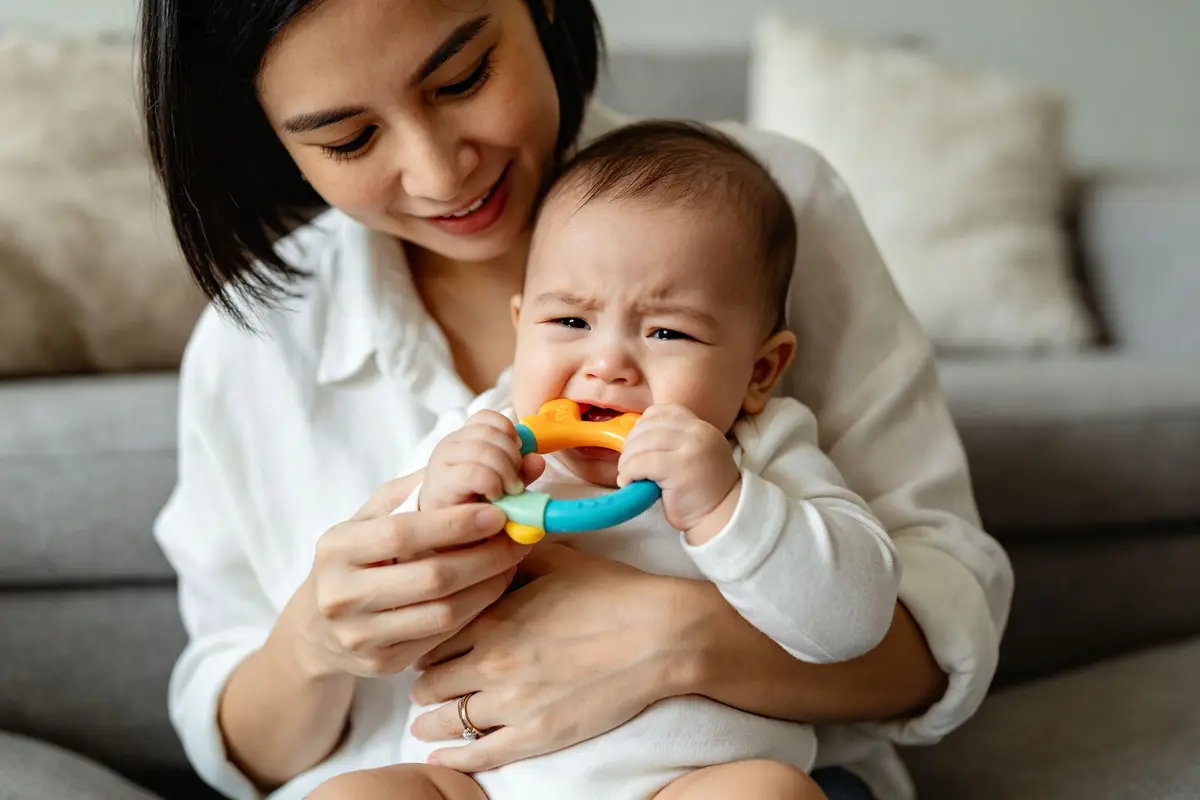
Teething was one of the hardest phases for me. My baby started drooling at 3 months, and by 6 months she was fussy, chewing on everything, and waking up crying at night. I felt helpless watching her uncomfortable. After trying everything, here's what actually brought her relief and what didn't work at all.
When Does Teething Start and What Are the Signs?
Teething typically starts between 4 and 7 months, though some babies start as early as 3 months or as late as 12 months. The first teeth are usually the two bottom front teeth, followed by the two top front teeth. Signs of teething: increased drooling, chewing on everything, swollen or tender gums, irritability, trouble sleeping, mild fussiness, and slightly red cheeks. A mild low-grade fever (under 101F/38.3C) can happen, but a high fever or diarrhea is not normal teething — call the doctor. Teething usually happens in waves, not all at once. Some babies barely notice it; others are very uncomfortable. It's hard to know how it will go until it happens.
What Actually Helps: Our Teething Relief Toolkit
Here's what worked for us: Cold teething rings. Put a silicone teether in the fridge (not freezer) and give it to baby to chew. The cold numbs the gums. Avoid hard frozen toys that can hurt. Gentle gum massage. Use a clean finger to gently rub your baby's gums. The pressure helps. Wet washcloth. Dampen a clean washcloth, chill it in the fridge, and let baby chew on it. Teething biscuits. Soft teething biscuits can help (watch for choking). Pain reliever. For really bad nights, ask your doctor about infant acetaminophen (Tylenol). Ibuprofen is not recommended under 6 months. What doesn't work: Amber necklaces (choking risk, no evidence), topical numbing gels with benzocaine (not recommended by the FDA for babies), and homeopathic teething tablets (recalled). Keep drool under control with soft Moni Happy's wipes to prevent teething rash. For gentle care, Moni Happy's tissues are soft on sensitive skin.
When to Call the Doctor
Teething is normal, but call your pediatrician if: fever over 101F (38.3C), diarrhea, vomiting, severe fussiness that won't settle, rash beyond the chin, or no teeth by 18 months. Teething doesn't last forever. Most babies have their first tooth by their first birthday, and the worst teething phase usually passes within a few weeks. Explore Moni Happy's collection for daily baby care essentials.
Frequently Asked Questions
When do babies start teething?
Teething typically starts between 4 and 7 months, though some start as early as 3 months or as late as 12 months. The first teeth are usually the two bottom front teeth. Signs include drooling, chewing, swollen gums, and fussiness.
What helps teething pain?
Cold (not frozen) teething rings from the fridge, gentle gum massage with a clean finger, a chilled wet washcloth, soft teething biscuits, and infant acetaminophen (ask your doctor). Avoid amber necklaces, benzocaine gels, and homeopathic teething tablets.
Is fever normal with teething?
A mild low-grade fever (under 101F/38.3C) can happen, but a high fever or diarrhea is not normal teething. Call your pediatrician if your baby has a fever over 101F, diarrhea, or seems very unwell.
When should I worry about teething?
Call the doctor if fever exceeds 101F (38.3C), baby has diarrhea or vomiting, severe fussiness won't settle, or there are no teeth by 18 months. Most babies get their first tooth by their first birthday.