
2026-09-05 · Moni Happy Mom
Baby Teething: Signs, Pain Relief & What to Avoid — A Mom's Guide
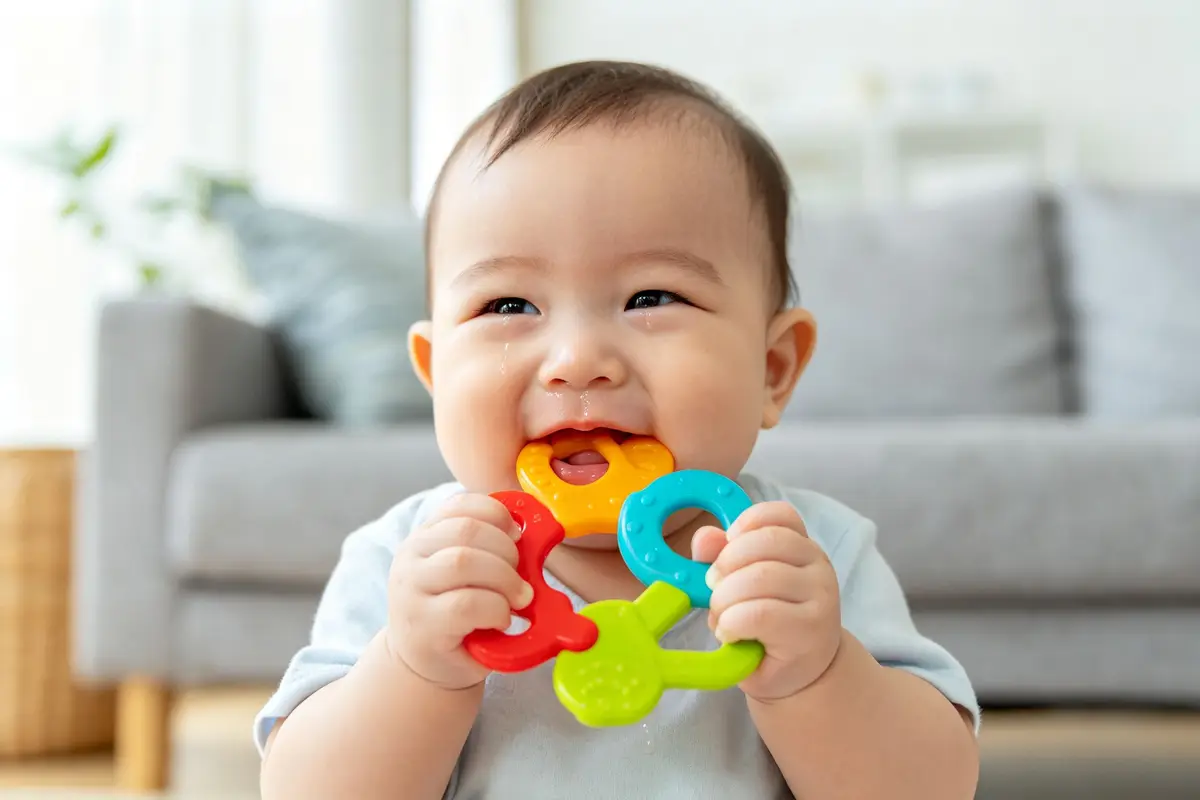
I'll never forget the week my daughter's first tooth came in. One day she was her usual happy, drooly self, and the next she was a red-faced, fist-chewing, inconsolable mess who wanted nothing but to be held and nursed 24/7. I was exhausted, she was miserable, and I felt completely unprepared. I'd read about teething in the baby books, but nothing prepared me for how intense it could be—or how many conflicting pieces of advice I'd get from every relative, stranger, and internet forum. If you're in the thick of teething hell right now, or you're trying to prepare before it hits, here's everything I learned (the hard way) about baby teething.
When does teething start and what's the timeline?
Most babies get their first tooth somewhere between 4 and 7 months, but the normal range is wide—anywhere from 3 months to 12 months is considered normal. Some babies are even born with teeth (natal teeth, which happens in about 1 in 2,000-3,000 births), and some don't get their first tooth until after their first birthday. If your baby hasn't gotten any teeth by 12-15 months, it's worth mentioning to your pediatrician, but it's usually not a cause for concern—late teething can run in families.
The typical teething order is: bottom front teeth (lower central incisors) first, usually around 6-10 months; then top front teeth (upper central incisors), around 8-12 months; then the teeth flanking the front teeth (lateral incisors), around 9-13 months on top and 10-16 months on bottom; then first molars (the big back teeth), around 13-19 months; then canines (the pointy teeth), around 16-23 months; and finally second molars, around 23-33 months. By age 3, most children have all 20 baby teeth. But this is just a general guide—every baby's teeth come in their own order and their own pace.
Important: The teething process can start weeks or even months before you actually see a tooth. The tooth moves up through the gum gradually, and the pressure can cause discomfort long before the tooth breaks through the gum. You may see a bluish-gray bump on the gum (called an eruption cyst or teething blister) where the tooth is about to come through—this is normal and usually resolves on its own once the tooth erupts.
What are the real signs of teething vs. something else?
This is the question that caused me the most confusion. Every time my baby was fussy, everyone said "oh, she must be teething." But teething gets blamed for everything, and it's important to know what's actually caused by teething and what might be something else.
Symptoms that ARE commonly associated with teething:
- Excessive drooling: This is the classic teething sign. Your baby may soak through several bibs a day. The increased saliva production is thought to be a response to gum irritation, though some babies drool a lot for other reasons too (it's also common around 3-4 months as the salivary glands mature).
- Chewing on everything: Your baby may chew on their fists, fingers, toys, your fingers, the furniture—anything they can get into their mouth. The pressure of chewing on something firm counteracts the pressure of the tooth coming up through the gum, providing relief.
- Gum swelling, redness, or tenderness: You may be able to see or feel a swollen bump on the gum where a tooth is coming. The gum may be redder than usual. If you gently press on the gum, your baby may pull away or fuss (it's tender).
- Irritability and fussiness: Teething is uncomfortable, and your baby may be crankier than usual, especially in the days leading up to a tooth breaking through. The discomfort is often worse at night (when there are fewer distractions and pain perception is heightened), which can disrupt sleep.
- Sleep disruption: Your previously good sleeper may start waking more frequently at night or resisting naps. This is usually temporary, but it can be exhausting.
- Rubbing the face or ear: Your baby may rub their cheek, jaw, or ear on the side where the tooth is coming. The pain from teething can radiate to the ear, which is why teething is often confused with an ear infection.
- Slight decrease in appetite: Some babies eat less when teething, especially for hot or cold foods that may irritate sensitive gums. They may also refuse the breast or bottle temporarily. This is usually mild and short-lived.
- Mild temperature elevation (under 38°C / 100.4°F): Some babies may have a slightly elevated temperature (low-grade fever) when a tooth is erupting. However, this is controversial—many experts believe teething doesn't cause true fever, and any temperature over 38°C (100.4°F) should be evaluated as potentially caused by something else.
Symptoms that are NOT caused by teething (and should be evaluated by a doctor):
- High fever (over 38°C / 100.4°F): Teething may cause a slight temperature elevation, but a true fever is more likely to be caused by an infection (viral or bacterial). If your baby has a fever, especially if they're under 3 months old, contact your pediatrician.
- Diarrhea: This is one of the most commonly attributed teething symptoms, but most experts agree that teething does NOT cause diarrhea. The theory is that babies swallow extra saliva, which may slightly loosen stools, but true diarrhea (watery, frequent stools) is more likely to be caused by a viral infection, food intolerance, or another issue. If your baby has diarrhea, especially with fever or signs of dehydration, contact your pediatrician.
- Vomiting: Not caused by teething. If your baby is vomiting, especially repeatedly or with other symptoms, contact your pediatrician.
- Runny nose, cough, or congestion: These are signs of a viral infection (cold), not teething. Teething may cause increased drooling, but not a runny nose from the nose or a cough.
- Rash on the body: A drool rash around the mouth and chin is common with teething (from moisture and friction), but a rash elsewhere on the body is not caused by teething and should be evaluated.
- Extreme lethargy or inconsolable crying: Teething may cause fussiness, but if your baby is extremely lethargic, hard to wake, or crying inconsolably for hours, that's not normal teething—seek medical attention.
The bottom line: teething causes local gum symptoms (drooling, chewing, gum swelling, mild irritability), but it does NOT cause systemic symptoms like high fever, diarrhea, vomiting, or respiratory symptoms. If your baby has those, don't assume it's teething—get them checked out.
What actually helps with teething pain?
Here's what worked for us, in order of what made the biggest difference. I've also included what to avoid, because there's a lot of bad teething advice out there.
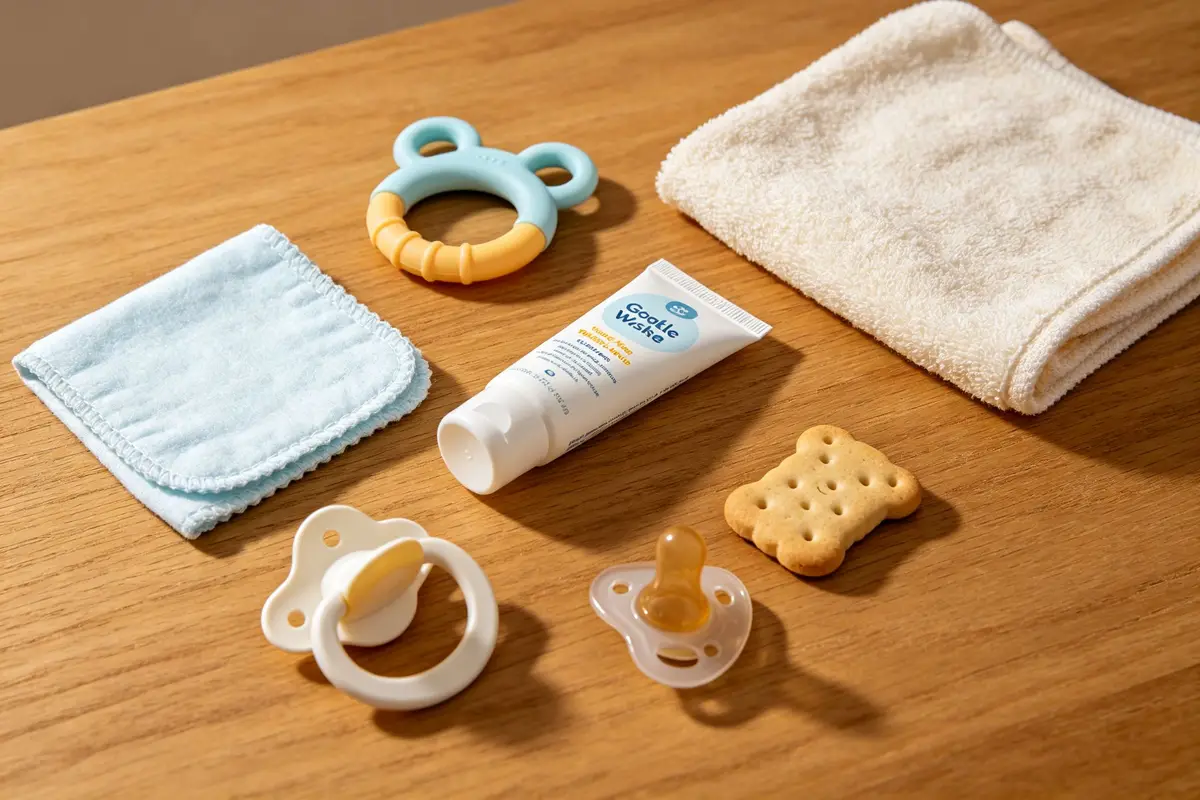
1. Cold, firm teething toys. This was our number one lifesaver. Put a silicone teething toy (or a clean, damp washcloth rolled up) in the fridge for 30-60 minutes, then give it to your baby to chew on. The cold numbs the gums and the firm pressure counteracts the tooth pressure. Important: do NOT freeze teething toys—frozen toys are too hard and too cold, and they can damage your baby's gums or even stick to their lips/tongue. Fridge-cold is perfect. We had a silicone teething toy that we kept in the fridge at all times, and it was worth every penny.
2. Gum massage. Wash your hands thoroughly, then gently massage your baby's gums with your clean finger (or a clean, damp gauze pad wrapped around your finger). Apply gentle, firm pressure in a circular motion on the swollen area. Many babies find this soothing, and it can provide immediate (if temporary) relief. My daughter would clamp down on my finger and chew, which was... not my favorite, but it helped her, so I endured it.
3. Cold food and drinks. If your baby is already eating solids, offer cold (not frozen) foods: chilled applesauce, cold yogurt, cold pureed fruit, a cold (not frozen) teething biscuit, or a frozen (but thawed slightly) breastmilk popsicle in a mesh feeder. The cold soothes the gums and the distraction of eating helps. For younger babies who aren't on solids yet, a cold (not frozen) washcloth to chew on works similarly.
4. Pain medication (when needed). If your baby is clearly in pain and the natural remedies aren't enough, infant acetaminophen (paracetamol) or ibuprofen (for babies 6 months and older) can provide significant relief. Check with your pediatrician for the correct dosage based on your baby's age and weight, and always use the measuring device that comes with the medication (not a kitchen spoon). We used acetaminophen on the worst nights—when she was waking every hour screaming—and it made a noticeable difference. Important: ibuprofen should not be given to babies under 6 months, and neither medication should be used for more than a few days without checking with your pediatrician. Never give aspirin to a baby or child (risk of Reye's syndrome).
5. Extra cuddles and comfort. Teething is uncomfortable, and your baby may just need extra comfort. Extra nursing, extra holding, extra rocking, a warm bath, a walk outside—whatever soothes your baby. There's no such thing as "spoiling" a teething baby. They're in pain, and they need you.
6. Wipe drool to prevent rash. Excess drool can cause a red, irritated rash around the mouth, chin, and neck. Gently wipe drool with a soft cloth (don't rub—pat), and apply a thin layer of petroleum jelly or a gentle barrier cream to protect the skin. We kept soft baby wipes handy for quick drool wipes when we were out and about.
What to AVOID:
- Frozen teething toys or frozen fruits directly on gums: Too cold and too hard—can damage gums and stick to lips/tongue. Use fridge-cold instead.
- Teething necklaces or bracelets: These are a strangulation and choking hazard. The FDA and many pediatric organizations warn against them. There have been reports of serious injuries and even deaths. Don't use them—on your baby or on yourself (if your baby can reach them while nursing).
- Amber teething necklaces: Same as above—strangulation/choking hazard, and there's no scientific evidence that amber provides pain relief.
- Teething gels containing benzocaine or lidocaine: The FDA warns against using benzocaine-containing teething products in children under 2 years old due to the risk of methemoglobinemia (a rare but serious condition where the blood can't carry enough oxygen). Lidocaine-containing gels can also cause numbness that makes swallowing difficult and can lead to choking. Avoid these products. If you want to use a gel, look for ones without benzocaine/lidocaine (some natural gels contain chamomile or other soothing ingredients, though evidence for their effectiveness is limited).
- Homeopathic teething tablets: The FDA has warned against certain homeopathic teething tablets (particularly those containing belladonna) due to inconsistent dosing and potential toxicity. Check with your pediatrician before using any homeopathic products.
- Whiskey or alcohol on gums: Never put alcohol on your baby's gums. This is an old wives' tale that is dangerous—alcohol can be absorbed through the gums and cause alcohol poisoning in infants. Don't do it.
- Hard objects that can break or chip: Avoid giving your baby hard objects (like frozen carrots, hard teething biscuits that can break off, or adult toothbrushes) that could break into small pieces and cause choking. Use silicone or rubber teething toys designed for babies.
How long does teething discomfort last?
The acute discomfort of a single tooth erupting usually lasts about 3-5 days—from when the tooth starts pressing hard on the gum to when it breaks through the surface. However, some babies seem to be uncomfortable for weeks before a tooth appears, and the molars (which are bigger and have a larger surface area pushing through the gum) can be more uncomfortable and last longer than the front teeth. The second molars (which come in around 2 years old) are often the worst because they're the largest and they come in when your toddler is more aware of pain and less able to distract themselves.
The good news: once the tooth breaks through the gum, the acute discomfort usually subsides quickly. The bad news: there are 20 baby teeth, and they come in over the course of 2-3 years, so teething is more of a marathon than a sprint. There will be good weeks and bad weeks, and it may feel like your baby is always teething (because, in a sense, they are—there's usually at least one tooth moving around under the gum at any given time during the first 2-3 years).
What got me through the worst of it: reminding myself that this is temporary, that every tooth that comes in is one less tooth to come, and that my baby wasn't doing this on purpose—she was in pain and needed me. We got through it, and you will too. And one day, you'll look at your baby's toothy grin and forget all about the sleepless nights and the screaming. (Mostly.)
Article Summary
Baby teething is a normal but often uncomfortable developmental process. Most babies get their first tooth between 4-7 months (normal range 3-12 months), with 20 baby teeth typically all in by age 3. The typical order is: bottom front teeth (6-10 mo), top front (8-12 mo), lateral incisors (9-16 mo), first molars (13-19 mo), canines (16-23 mo), second molars (23-33 mo). Teething can start weeks before a tooth is visible. Real teething symptoms include: excessive drooling, chewing on everything, gum swelling/redness/tenderness, irritability/fussiness, sleep disruption, face/ear rubbing, mild appetite decrease, and possibly slight temperature elevation under 38°C. Symptoms NOT caused by teething (and requiring medical evaluation): high fever over 38°C, diarrhea, vomiting, runny nose/cough/congestion, body rash, extreme lethargy, or inconsolable crying. What helps: cold (not frozen) firm teething toys, clean finger gum massage, cold foods/drinks for babies on solids, infant acetaminophen or ibuprofen (6+ mo) when pain is significant (with pediatrician-approved dosage), extra cuddles/comfort, and wiping drool to prevent skin rash. What to avoid: frozen toys (too hard/cold), teething necklaces/bracelets (strangulation/choking hazard), benzocaine/lidocaine gels (FDA warning for under 2), homeopathic tablets with belladonna, whiskey/alcohol on gums, and hard breakable objects. Acute discomfort per tooth lasts about 3-5 days, though molars can be worse and longer. Teething is a marathon over 2-3 years, but it's temporary—remind yourself that every tooth that comes in is one less to come, and your baby needs your comfort through the pain.
Frequently Asked Questions
When do babies start teething?
Most babies get their first tooth between 4 and 15 months, with the average around 6-8 months. The lower front teeth (lower central incisors) usually come in first, followed by the upper front teeth. Some babies are born with teeth (natal teeth), and others don't get their first tooth until after their first birthday — both can be normal.
What are the signs of teething?
Common teething signs include drooling (more than usual), chewing on everything, irritability and fussiness, swollen or tender gums, rubbing the ears or cheeks, slight temperature rise (under 101°F / 38.3°C), disrupted sleep, and decreased appetite for solids. Note that high fever, diarrhea, and vomiting are NOT typical teething symptoms — if these occur, contact your pediatrician.
What's the best way to soothe teething pain?
Safe teething remedies include: a cold (not frozen) teething ring or wet washcloth for baby to chew on, gentle gum massage with a clean finger, offering cold pureed foods or chilled applesauce, and extra cuddles and comfort. For pain that's clearly bothering your baby, you can ask your pediatrician about infant acetaminophen or ibuprofen (ibuprofen only for babies 6 months and older). Avoid teething necklaces, amber beads, and numbing gels containing benzocaine.
How do I care for my baby's new teeth?
Start cleaning your baby's gums even before teeth appear — wipe them gently with a clean, damp washcloth after feedings. Once the first tooth appears, brush it gently with a soft infant toothbrush and a tiny amount of fluoride toothpaste (about the size of a grain of rice for babies under 3). Avoid putting your baby to bed with a bottle of milk or juice, and schedule the first dental visit by age 1.
Frequently Asked Questions
What are the real signs of teething and what symptoms should NOT be blamed on teething?
Teething causes local gum symptoms, but it gets blamed for everything—and it's important to distinguish what's actually teething from what might be something more serious. Symptoms that ARE commonly associated with teething: (1) Excessive drooling — The classic sign. Your baby may soak through multiple bibs daily. Increased saliva is a response to gum irritation, though drooling also commonly starts around 3-4 months as salivary glands mature. (2) Chewing on everything — Fists, fingers, toys, your fingers, furniture. Firm chewing pressure counteracts the upward pressure of the tooth, providing relief. (3) Gum swelling, redness, or tenderness — You may see or feel a swollen bump where a tooth is coming. The gum may be redder, and pressing gently may cause fussing. A bluish-gray eruption cyst (teething blister) may appear where the tooth is about to break through—this is normal. (4) Irritability and fussiness — Especially in the days before a tooth breaks through. Pain is often worse at night when there are fewer distractions. (5) Sleep disruption — Previously good sleepers may wake more frequently or resist naps. Usually temporary. (6) Rubbing the face, cheek, or ear — Pain can radiate to the ear, which is why teething is often confused with ear infections. (7) Slight decrease in appetite — Some babies eat less, especially hot/cold foods that irritate gums. Usually mild and short-lived. (8) Mild temperature elevation (under 38°C/100.4°F) — Controversial; many experts say teething doesn't cause true fever. Symptoms that are NOT caused by teething and should be evaluated by a doctor: (1) High fever (over 38°C/100.4°F) — More likely an infection. Especially concerning in babies under 3 months. (2) Diarrhea — Commonly attributed to teething but NOT caused by it. The theory that swallowed saliva loosens stools doesn't hold up—true diarrhea (watery, frequent) is more likely viral infection, food intolerance, or another issue. (3) Vomiting — Not a teething symptom. Repeated vomiting requires evaluation. (4) Runny nose, cough, congestion — Signs of a viral cold, not teething. Teething causes drooling from the mouth, not nasal discharge or cough. (5) Body rash — A drool rash around the mouth/chin is common, but a rash elsewhere is not teething-related. (6) Extreme lethargy or inconsolable crying for hours — Teething causes fussiness, but extreme lethargy or hours of inconsolable crying is not normal and requires medical attention. The key principle: teething causes LOCAL gum symptoms (drooling, chewing, gum swelling, mild irritability), not SYSTEMIC symptoms (high fever, diarrhea, vomiting, respiratory symptoms). If your baby has systemic symptoms, don't assume it's teething—get them checked out. When in doubt, call your pediatrician. It's always better to have something ruled out than to miss a real issue.
What teething remedies are safe and effective, and which should I avoid?
Safe and effective teething remedies: (1) Cold (not frozen) firm teething toys — The #1 lifesaver for many parents. Put a silicone teething toy or a clean, damp washcloth (rolled up) in the fridge for 30-60 minutes. The cold numbs the gums and firm pressure counteracts tooth pressure. Do NOT freeze—frozen toys are too hard and too cold, can damage gums, and can stick to lips/tongue. Fridge-cold is perfect. (2) Clean finger gum massage — Wash hands thoroughly, then gently massage the swollen gum with a clean finger or damp gauze pad in circular motions with firm (but gentle) pressure. Provides immediate, if temporary, relief. (3) Cold foods and drinks — For babies on solids: chilled applesauce, cold yogurt, cold pureed fruit, cold (not frozen) teething biscuit, or a slightly thawed breastmilk popsicle in a mesh feeder. For younger babies, a cold washcloth to chew on works similarly. (4) Infant pain medication when needed — Infant acetaminophen (paracetamol) for any age, or ibuprofen for babies 6 months+, can provide significant relief when natural remedies aren't enough. Always use the correct dosage based on weight (check with pediatrician), use the included measuring device (not a kitchen spoon), and don't use for more than a few days without medical advice. Never give aspirin to children (Reye's syndrome risk). (5) Extra cuddles and comfort — Extra nursing, holding, rocking, warm baths, walks outside. You can't spoil a teething baby—they're in pain and need comfort. (6) Wipe drool to prevent rash — Gently pat (don't rub) drool with a soft cloth, and apply a thin layer of petroleum jelly or barrier cream to protect the skin around the mouth and chin. Remedies to AVOID: (1) Frozen teething toys or frozen fruits directly on gums — Too cold and too hard; can damage gums and stick to lips/tongue. Use fridge-cold instead. (2) Teething necklaces or bracelets (including amber) — Strangulation and choking hazard. The FDA and many pediatric organizations warn against them. There have been reports of serious injuries and deaths. Don't use them on your baby or yourself (if baby can reach them while nursing). (3) Teething gels with benzocaine or lidocaine — FDA warns against benzocaine in children under 2 due to risk of methemoglobinemia (a serious blood condition). Lidocaine can cause numbness that impairs swallowing and increases choking risk. Avoid these. If using a gel, choose one without benzocaine/lidocaine (natural gels with chamomile may be soothing though evidence is limited). (4) Homeopathic teething tablets with belladonna — FDA has warned about inconsistent dosing and potential toxicity. Check with pediatrician before using any homeopathic products. (5) Whiskey or alcohol on gums — Dangerous old wives' tale. Alcohol can be absorbed through gums and cause alcohol poisoning in infants. Never do this. (6) Hard objects that can break or chip — Frozen carrots, hard teething biscuits that can break off, adult toothbrushes—these can break into small pieces and cause choking. Use silicone/rubber teething toys designed for babies. (7) Numbs-it or other numbing agents with unknown ingredients — Stick to products you can verify the ingredients of, and always check with your pediatrician. General principle: if a remedy seems too good to be true, involves something you'd put in your own mouth as an adult (alcohol, whiskey), or has warnings from regulatory agencies, avoid it. Stick to the simple, evidence-based remedies above, and when in doubt, check with your pediatrician.
When do babies start teething, what order do teeth come in, and how long does the pain last?
Most babies get their first tooth between 4 and 7 months, but the normal range is wide—anywhere from 3 to 12 months is considered normal. Some babies are born with teeth (natal teeth, about 1 in 2,000-3,000 births), and some don't get their first tooth until after their first birthday. If no teeth by 12-15 months, mention it to your pediatrician, but it's usually not concerning—late teething often runs in families. Typical teething order (with average age ranges): (1) Lower central incisors (bottom front two teeth) — 6-10 months. These are usually the first teeth. (2) Upper central incisors (top front two teeth) — 8-12 months. (3) Upper lateral incisors (teeth flanking the top front teeth) — 9-13 months. (4) Lower lateral incisors (teeth flanking the bottom front teeth) — 10-16 months. (5) First molars (big back teeth) — 13-19 months. These are often more uncomfortable because they're larger and have a bigger surface area pushing through the gum. (6) Canines (pointy teeth, also called cuspids) — 16-23 months. (7) Second molars (back teeth, behind the first molars) — 23-33 months. These are often the worst because they're the largest and come in when toddlers are more aware of pain. By age 3, most children have all 20 baby teeth (primary teeth). Important caveats: This is just a general guide—every baby's teeth come in their own order and pace. Some babies get teeth out of order, some get multiple teeth at once, and some have long gaps between teeth. All of this is normal. The teething process can start weeks or even months before you see a tooth. The tooth moves up through the gum gradually, and the pressure can cause discomfort long before it breaks through. You may see a bluish-gray bump on the gum (eruption cyst or teething blister) where the tooth is about to come through—this is normal and resolves once the tooth erupts. How long does the pain last? The acute discomfort of a single tooth erupting usually lasts about 3-5 days—from when the tooth starts pressing hard on the gum to when it breaks through the surface. However, some babies seem uncomfortable for weeks before a tooth appears, and molars can be more uncomfortable and last longer than front teeth. Once the tooth breaks through the gum, acute discomfort usually subsides quickly. The bigger picture: there are 20 baby teeth coming in over 2-3 years, so teething is more of a marathon than a sprint. There will be good weeks and bad weeks, and it may feel like your baby is always teething (because there's usually at least one tooth moving under the gum at any given time during the first 2-3 years). What helps with the marathon: remind yourself this is temporary, every tooth that comes in is one less to come, and your baby isn't doing this on purpose—they're in pain and need you. Keep cold teething toys in the fridge at all times, have pain medication on hand (with pediatrician-approved dosage), and accept extra help when offered. You will get through it, and one day you'll look at your baby's toothy grin and (mostly) forget about the sleepless nights.
My baby has a fever and diarrhea—everyone says it's teething. Should I be worried?
This is one of the most common and potentially dangerous misconceptions about teething. While many people (including some well-meaning relatives and even some healthcare providers) attribute fever and diarrhea to teething, the medical consensus is that teething does NOT cause high fever or diarrhea. Here's what you need to know: Teething may cause a SLIGHT temperature elevation (some studies show a small increase of 0.1-0.5°C on the day a tooth erupts), but this is not a true fever. Any temperature over 38°C (100.4°F) should be considered a fever and evaluated as potentially caused by an infection, not teething. The reason this myth persists: babies often get viral infections (colds, stomach bugs) around the same age that teething starts (6-12 months), because this is when maternal antibodies are waning and babies are putting everything in their mouths (exposing them to more germs). So the timing overlaps, and people assume teething caused the symptoms when it was actually a coincidental viral illness. Diarrhea is similarly NOT caused by teething. The theory that babies swallow extra saliva which loosens stools doesn't hold up to scrutiny—saliva is mostly reabsorbed in the stomach and doesn't significantly affect stool consistency. True diarrhea (watery, frequent stools, more than 3-4 loose stools per day in a baby who normally has firmer stools) is more likely caused by: viral gastroenteritis (stomach bug—very common in babies), bacterial infection, food intolerance or allergy, antibiotic use, or another medical issue. What you should do if your baby has fever AND diarrhea: (1) Don't assume it's teething. Take it seriously. (2) Monitor for dehydration — This is the biggest risk with diarrhea in babies. Signs of dehydration include: fewer wet diapers (less than 4-6 per day, or no wet diaper for 6+ hours), dry mouth/lips, no tears when crying, sunken soft spot (fontanelle) on the head, lethargy or excessive sleepiness, decreased skin elasticity (skin doesn't bounce back when pinched). If you see any of these signs, seek medical attention immediately. (3) Continue feeding — Continue breastfeeding or formula feeding as usual. For babies on solids, offer bland foods (bananas, rice, applesauce, toast—known as the BRAT diet, though current guidelines say you can offer normal foods as tolerated). Avoid fruit juices (they can worsen diarrhea) and avoid high-sugar or high-fat foods. (4) Offer oral rehydration solution — If your baby is having frequent watery stools, an oral rehydration solution (like Pedialyte or equivalent) can help replace lost fluids and electrolytes. Check with your pediatrician for the correct amount for your baby's age and weight. (5) Use fever-reducing medication appropriately — Infant acetaminophen (or ibuprofen for 6+ months) can reduce fever and discomfort. Use the correct dosage based on weight, and check with your pediatrician if you're unsure. (6) Contact your pediatrician — Especially if: your baby is under 3 months old with any fever (this is an emergency—seek medical attention immediately); the fever is over 39°C (102.2°F); the fever lasts more than 24-48 hours; diarrhea lasts more than 2-3 days; there's blood or mucus in the stool; your baby shows signs of dehydration; your baby is lethargic, hard to wake, or inconsolable; your baby is vomiting and can't keep fluids down; or you're concerned for any reason. (7) Practice good hand hygiene — Diarrheal illnesses are often viral and highly contagious. Wash hands frequently, especially after diaper changes, and disinfect changing areas. Keep your baby home from daycare or group settings until the diarrhea has resolved. The bottom line: teething causes local gum discomfort (drooling, chewing, gum swelling, mild fussiness), not systemic illness (fever, diarrhea, vomiting). If your baby has fever and diarrhea, don't dismiss it as teething—get them evaluated by a healthcare professional. It's probably a viral illness that will resolve on its own, but it's important to rule out more serious causes and monitor for dehydration. When in doubt, call your pediatrician—that's what they're there for.