
2026-09-22 · Moni Happy Editorial
Baby Vision Development: What I Wish I Knew About Newborn Eyesight
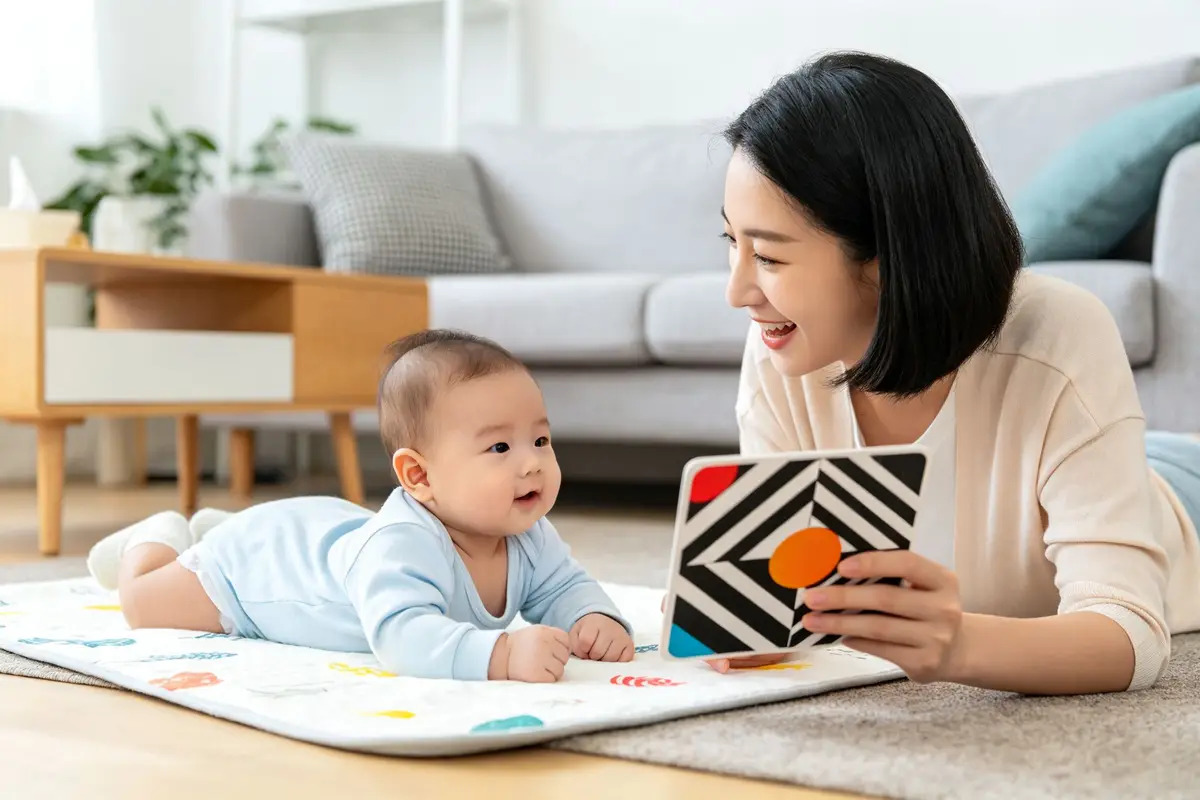
When my baby was six weeks old and still only looking at high-contrast shapes, I worried her vision wasn't developing right. The pediatrician said she was perfectly on track. Newborn vision is surprisingly limited — it's one of the most gradual senses to develop. Here's what I learned about baby vision milestones.
What can a newborn see?
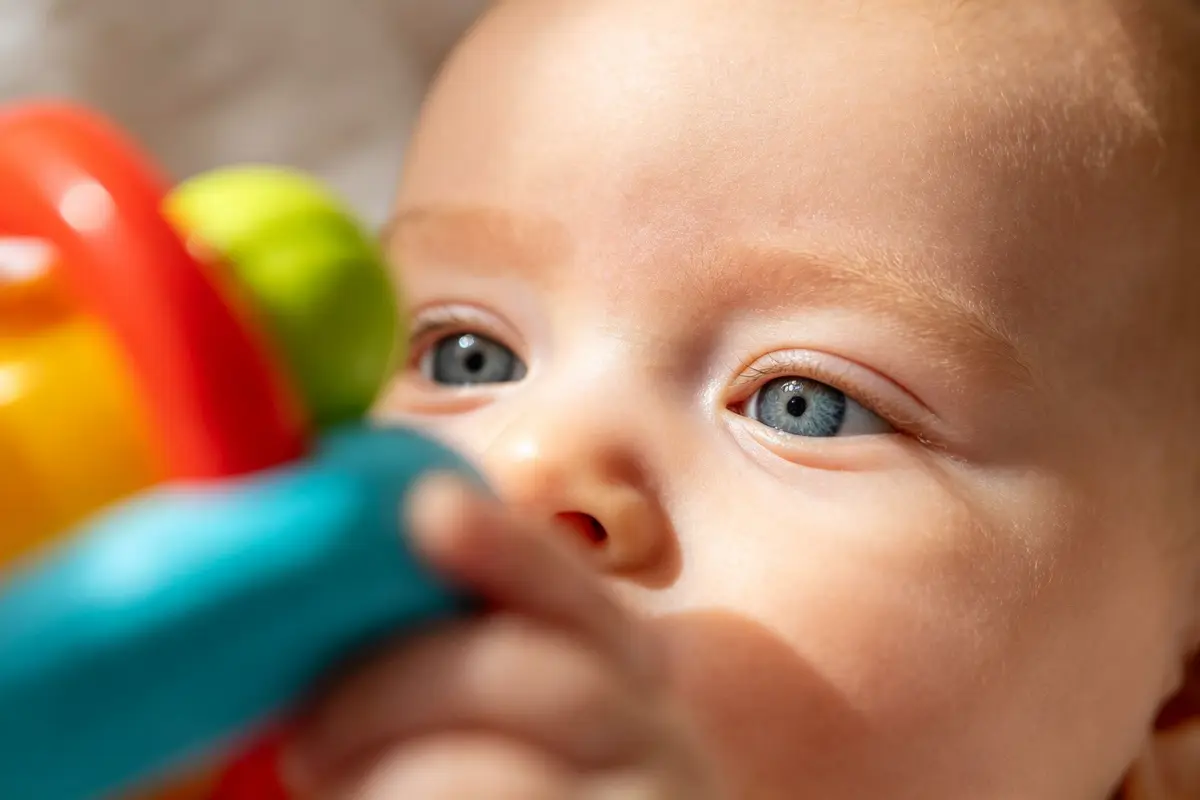
Newborns see best at 20-30 cm — about the distance from your face while nursing. They prefer high-contrast patterns (black and white stripes, bold shapes) and human faces. Color vision is immature at birth; they see mainly in shades of gray and red. Full color vision develops by 3-4 months. Their eyes may cross or wander in the first few weeks — that's normal as eye muscles strengthen.
What are vision milestones by month?
0-1 month: focuses on faces 20-30 cm away, tracks moving objects briefly. 1-3 months: follows moving objects 180 degrees, recognizes familiar faces, starts smiling visually. 3-6 months: depth perception develops, reaches for objects, eyes should work together consistently. 6-12 months: watches objects fall, looks for dropped toys, crawls and reaches with coordinated vision. By 1 year, vision is approaching adult sharpness.
How do I support vision development?
Use high-contrast black and white cards in the first few weeks. Place baby on their tummy and put toys just out of reach. Talk to your face 20-30 cm away. By 3 months, colorful toys within arm's reach help. Avoid screens — the AAP recommends no screen time under 18 months except video chats. Natural light is good, but protect eyes from direct sun. Use soft blankets and toys that encourage visual tracking.
When should I worry about my baby's vision?
Contact your pediatrician or pediatric ophthalmologist if: eyes don't track or follow by 3-4 months, one eye consistently wanders or crosses after 3 months, baby doesn't make eye contact, doesn't smile visually by 6-8 weeks, has excessive tearing, redness, sensitivity to light, or a white pupil reflection instead of red eye in photos.
FAQ
Is it normal for newborn eyes to cross?
Yes, occasional crossing in the first 6-8 weeks is normal as eye muscles strengthen. If one eye consistently turns in or out after 3 months, or the crossing happens frequently, see a pediatric ophthalmologist.
When do babies see color?
Newborns see mainly in gray and red tones. Color vision gradually develops and is generally mature by 3-4 months. High-contrast black and white patterns work best in the first two months.
Should I worry if my baby doesn't make eye contact?
Limited eye contact can be normal in the first few weeks. But if by 6-8 weeks your baby doesn't make eye contact or respond to faces, mention it to your pediatrician. This can be a developmental concern worth evaluating.
When is the first vision exam?
The AAP recommends a vision screening at every well-child visit, with a formal vision exam by age 3-5. If there's a family history of strabismus (crossed eyes), lazy eye, or childhood cataracts, ask for an earlier referral to a pediatric ophthalmologist.
Summary
Newborn vision starts fuzzy and close, gradually maturing to full color and depth perception by 6-12 months. Support it with high-contrast cards, face-to-face interaction, tummy time with toys, and no screens. Watch for red flags like persistent eye crossing, lack of tracking, or poor eye contact, and don't hesitate to ask your pediatrician.
Frequently Asked Questions
Is it normal for newborn eyes to cross?
Occasional crossing in the first 6-8 weeks is normal. If one eye consistently turns in or out after 3 months, see a pediatric ophthalmologist.
When do babies see color?
Newborns see mainly in gray and red tones. Color vision is generally mature by 3-4 months. High-contrast black and white patterns work best in the first two months.
Should I worry if my baby doesn't make eye contact?
Limited eye contact is normal in the first few weeks. If by 6-8 weeks there's no eye contact or response to faces, mention it to your pediatrician.
When is the first vision exam?
A vision screening at every well-child visit, with a formal exam by age 3-5. If there's a family history of eye conditions, ask for an earlier referral.