
2026-09-07 · Moni Happy Mom
Crib to Toddler Bed Transition: A Mom's Step-by-Step Guide
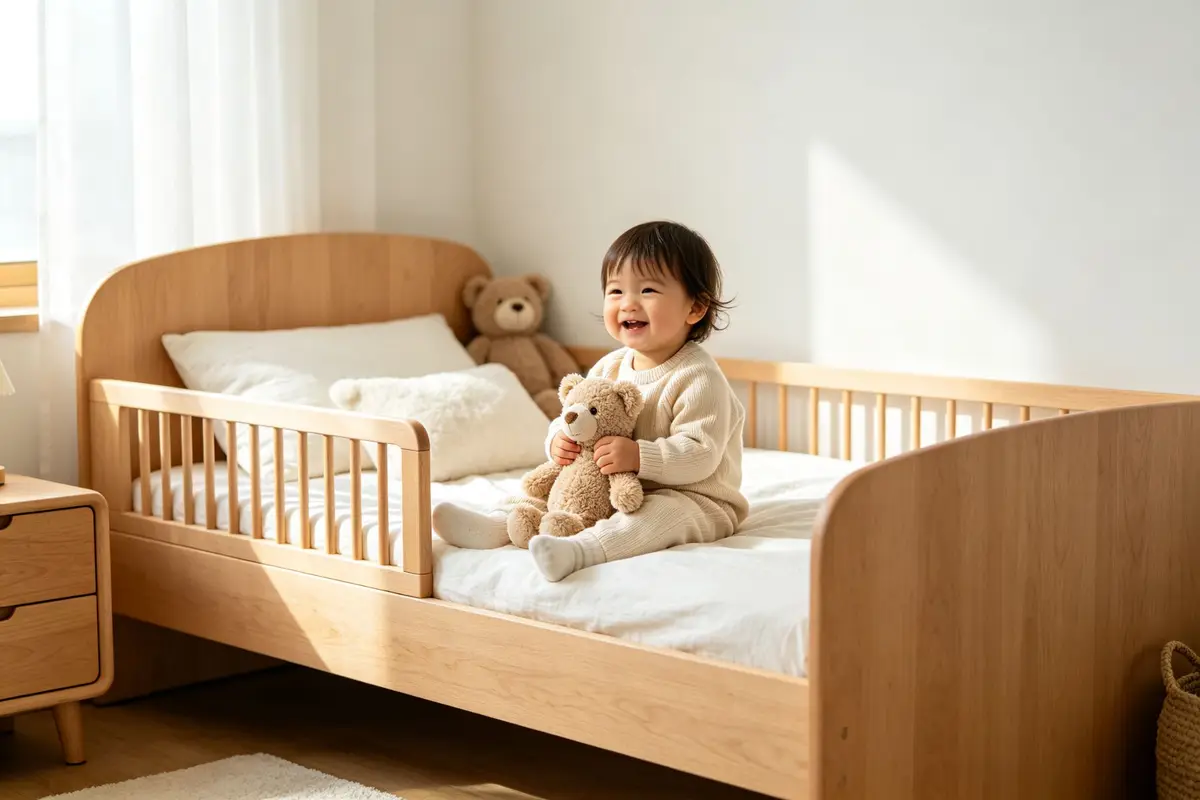
The day I took the side off my oldest daughter's crib, I stood in her bedroom and cried a little. Not because I was sad — well, maybe a little — but because it felt like such a big milestone. My baby was becoming a toddler, and suddenly she could get in and out of bed whenever she wanted. The transition wasn't perfect — there were nights she got out of bed 15 times, nights she fell out (thank goodness for the bed rail), and one memorable night she fell asleep on the floor next to the bed. But we survived, and by the third child, I had a system. If you're thinking about transitioning your toddler from a crib to a bed, here's what I've learned from doing it three times.
When Should I Transition My Toddler to a Bed?
There's no one-size-fits-all answer, but most experts recommend transitioning between 18 months and 3 years. The key is to watch for signs of readiness rather than going by a specific age. With my first, I transitioned at 2.5 because she started climbing out of the crib. With my second, we waited until almost 3 because she was happy in the crib and showed no interest in leaving. With my third, we transitioned at 2 because we needed the crib for the new baby. Here are the signs that your toddler may be ready:
- They're climbing out of the crib: This is the most common reason parents transition. If your toddler can climb out of the crib, it's no longer safe — they could fall and injure themselves. Once they figure out how to climb out, they'll keep doing it, so it's time to make the switch.
- They're asking for a "big kid bed": Some toddlers express interest in a bed, especially if they have an older sibling who sleeps in one or if they see beds in books or on TV. If your toddler is consistently asking for a bed and seems excited about the idea, that's a good sign of readiness.
- They seem too big for the crib: If your toddler's head or feet are touching the ends of the crib, or if they seem cramped when they sleep, it may be time for a bigger sleeping space.
- Potty training: If you're potty training, a bed makes it easier for your toddler to get up and use the potty at night (though you'll still want to remind them and possibly use a nightlight).
- A new baby is coming: If you need the crib for a new sibling, you may need to transition earlier. If possible, try to make the transition a few months before the baby arrives so your toddler doesn't associate the new baby with losing their crib.
On the other hand, there's no rush to transition if your toddler is happy and safe in the crib. Some kids stay in cribs until 3 or even 3.5, and that's perfectly fine. The longer they stay in the crib, the longer you have before you deal with the "getting out of bed" phase. Wait for signs of readiness rather than transitioning because you think you "should."
How Do I Make the Transition Smooth?
Based on my experience (and many, many mistakes), here's the approach that worked best for us:
1. Talk About It in Advance
Don't spring the bed on your toddler — talk about it for 1-2 weeks before the transition. Read books about sleeping in a big kid bed (we loved "The Going-to-Bed Book" by Sandra Boynton and "Little Bear's Bedtime"), point out beds in books and on TV, and let your toddler help pick out new bedding or a special stuffed animal for the bed. Frame it as an exciting milestone, not a punishment. We made a big deal about it — "You're such a big kid now! You get to sleep in a big kid bed just like your sister!"
2. Choose the Right Bed
You have a few options when transitioning from a crib:
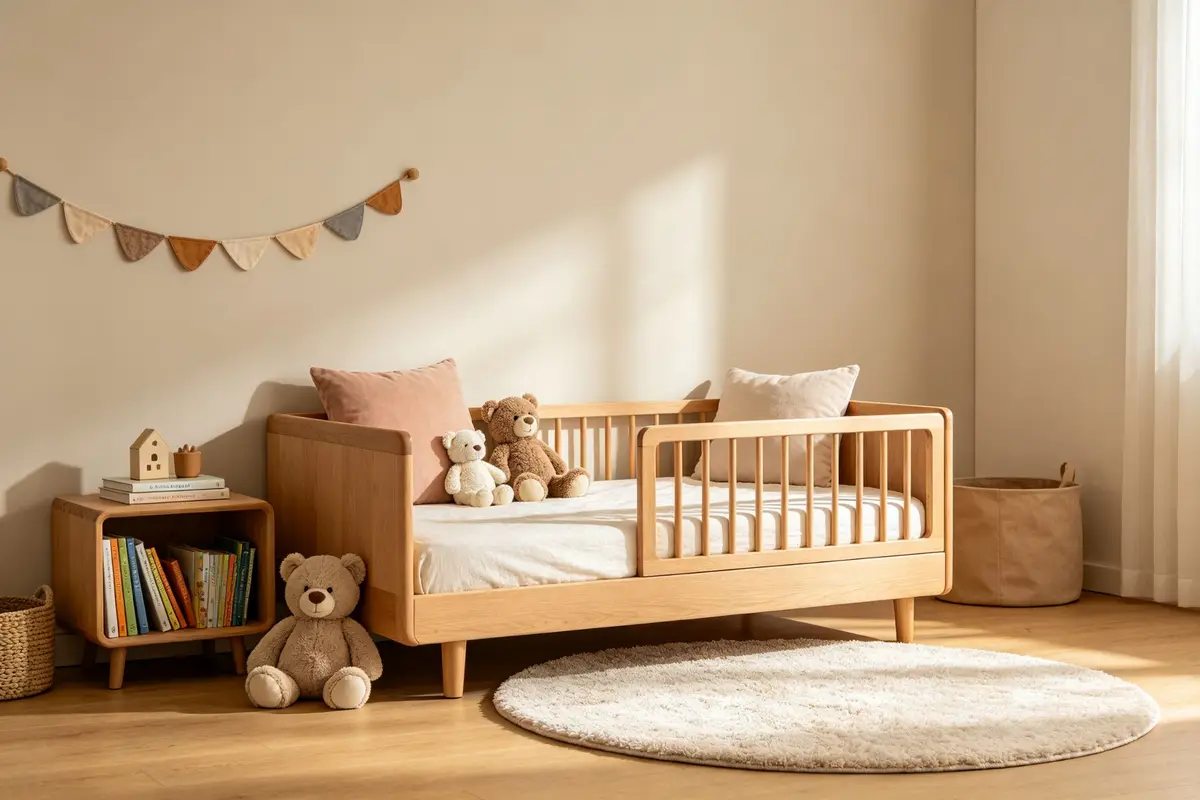
- Toddler bed: A toddler bed is low to the ground and uses the crib mattress, making it a familiar and safe option. Many cribs convert to toddler beds with a conversion kit. Toddler beds have safety rails on both sides (or one side against the wall), which helps prevent falls.
- Twin bed with a bed rail: A twin bed is a bigger investment but will last longer. If you go this route, use a sturdy, well-fitted bed rail to prevent falls. Place the bed against a wall on one side and use the rail on the other side.
- Mattress on the floor: For a budget-friendly and safe option, you can simply put the crib mattress (or a twin mattress) directly on the floor. This eliminates the risk of falls entirely and is a great option for toddlers who move around a lot in their sleep.
We used a toddler bed for all three kids — it was low enough that falls weren't a big concern, and the familiarity of the same mattress helped with the transition. We also kept a soft blanket and their favorite stuffed animal on the bed for comfort.
3. Toddler-Proof the Bedroom
Once your toddler can get in and out of bed independently, the entire bedroom becomes their playground at night. Before the transition, make sure the bedroom is completely toddler-proof:
- Anchor all furniture (dressers, bookshelves, nightstands) to the wall to prevent tipping
- Cover all electrical outlets
- Secure cords from blinds or curtains out of reach
- Remove any small objects that could be a choking hazard
- Make sure windows are locked and secured
- Use a baby gate at the bedroom door if needed (to prevent wandering into the hallway or stairs at night)
- Consider a childproof doorknob cover if you don't want your toddler opening the door at night
- Use a nightlight so your toddler can see if they get up at night
4. Keep the Bedtime Routine Consistent
One of the most important things you can do during the transition is to keep the bedtime routine exactly the same. If your routine is bath, pajamas, brush teeth, story, bed — keep doing it in the same order, at the same time. The familiarity of the routine will help your toddler feel secure even though their sleeping environment has changed. We added one new element to the routine: a "bedtime pass" — a special card that allowed our toddler to get out of bed one time for a specific reason (water, hug, bathroom). After using the pass, they had to stay in bed. This gave them a sense of control and reduced the constant getting out of bed.
5. Handle the "Getting Out of Bed" Phase
This is the hardest part of the transition, and it's normal — almost every toddler goes through a phase of getting out of bed repeatedly. Here's what worked for us:
- Stay calm and consistent. When your toddler gets out of bed, calmly and quietly walk them back to bed without making eye contact or engaging in conversation. Say something brief like "It's bedtime, stay in bed" and leave. Repeat as many times as needed — it may take 10, 20, or even 50 times the first few nights, but consistency pays off.
- Don't make it rewarding. Don't play with them, read extra stories, or let them watch TV when they get out of bed. If getting out of bed leads to fun or attention, they'll keep doing it.
- Praise staying in bed. In the morning, praise your toddler for staying in bed all night (even if they didn't — focus on the effort). You can use a sticker chart or small reward for nights they stay in bed.
- Expect setbacks. There will be good nights and bad nights. Travel, illness, teething, and changes in routine can all cause regression. Be patient and consistent, and the phase will pass.
What About Sleep Regression?
It's common for toddlers to experience a temporary sleep regression during the transition to a bed. They may take longer to fall asleep, wake up more at night, or wake up earlier in the morning. This is usually because the new freedom is exciting and they're still learning the rules. In most cases, the regression lasts 1-3 weeks and resolves with consistent boundaries. If the regression lasts longer than a month or is causing significant sleep deprivation for your toddler or your family, talk to your pediatrician — there may be other factors at play, and they can help you develop a plan.
Frequently Asked Questions
What is the best age to transition from crib to toddler bed?
Most experts recommend transitioning between 18 months and 3 years, but the best age depends on your individual toddler. Watch for signs of readiness: climbing out of the crib, asking for a big kid bed, seeming too big for the crib, or potty training. If your toddler is happy and safe in the crib, there's no rush — some kids stay in cribs until 3 or 3.5, which is perfectly fine. Wait for signs of readiness rather than transitioning because you think you "should." If you need the crib for a new baby, try to transition a few months before the baby arrives so your toddler doesn't associate the new baby with losing their crib.
How do I keep my toddler from falling out of bed?
There are several ways to prevent falls: use a toddler bed (which is low to the ground with built-in safety rails), use a twin bed with a sturdy, well-fitted bed rail on the open side and push the other side against the wall, or simply put the mattress directly on the floor (eliminating fall risk entirely). For the first few weeks, you may also want to place a soft rug or pillow next to the bed in case of falls. Most toddlers learn to adjust to the bed within a few weeks, and falls become less frequent as they get used to the new sleeping space.
My toddler keeps getting out of bed — what should I do?
This is the most common challenge during the transition, and it's normal. When your toddler gets out of bed, calmly and quietly walk them back without making eye contact or engaging in conversation. Say something brief like "It's bedtime, stay in bed" and leave. Repeat as many times as needed — it may take 10, 20, or even 50 times the first few nights, but consistency pays off. Don't make getting out of bed rewarding (no play, extra stories, or screen time). Praise staying in bed in the morning, and consider a sticker chart or small reward for successful nights. The phase usually lasts 1-3 weeks with consistent boundaries.
Should I use a toddler bed or a twin bed?
Both options work, and the choice depends on your budget, space, and preferences. A toddler bed is low to the ground, uses the familiar crib mattress, and has built-in safety rails, making it a safe and comfortable first bed. However, your toddler will outgrow it in 1-2 years. A twin bed is a bigger investment but will last through childhood and beyond — use a sturdy bed rail and push one side against the wall for safety. A third option is to put the mattress directly on the floor, which is budget-friendly and eliminates fall risk entirely. We used toddler beds for all three kids and found them to be a smooth transition, but many families prefer twin beds for longevity.
Article Summary
Transitioning from a crib to a toddler bed is a major milestone that most children make between 18 months and 3 years, guided by signs of readiness like climbing out of the crib, asking for a big kid bed, or seeming too large for the crib. A smooth transition involves talking about it in advance, choosing the right bed (toddler bed, twin bed with rail, or mattress on floor), thoroughly toddler-proofing the bedroom, keeping the bedtime routine consistent, and calmly handling the inevitable "getting out of bed" phase with patience and consistency. Temporary sleep regression is common but usually resolves within 1-3 weeks. The key is to wait for readiness, prepare the environment, and maintain consistent boundaries — and remember that this phase, like all toddler phases, will pass.