
2026-10-09 · Moni Happy Editorial Team
Introducing Allergens to Baby: AAP Timeline

The AAP recommends introducing common allergens like peanut, egg, and wheat between 4 and 6 months, not after 1 year. Delaying allergens does not prevent allergies. Start with small amounts (a rice-grain size) and watch for reactions over 3 to 5 days.
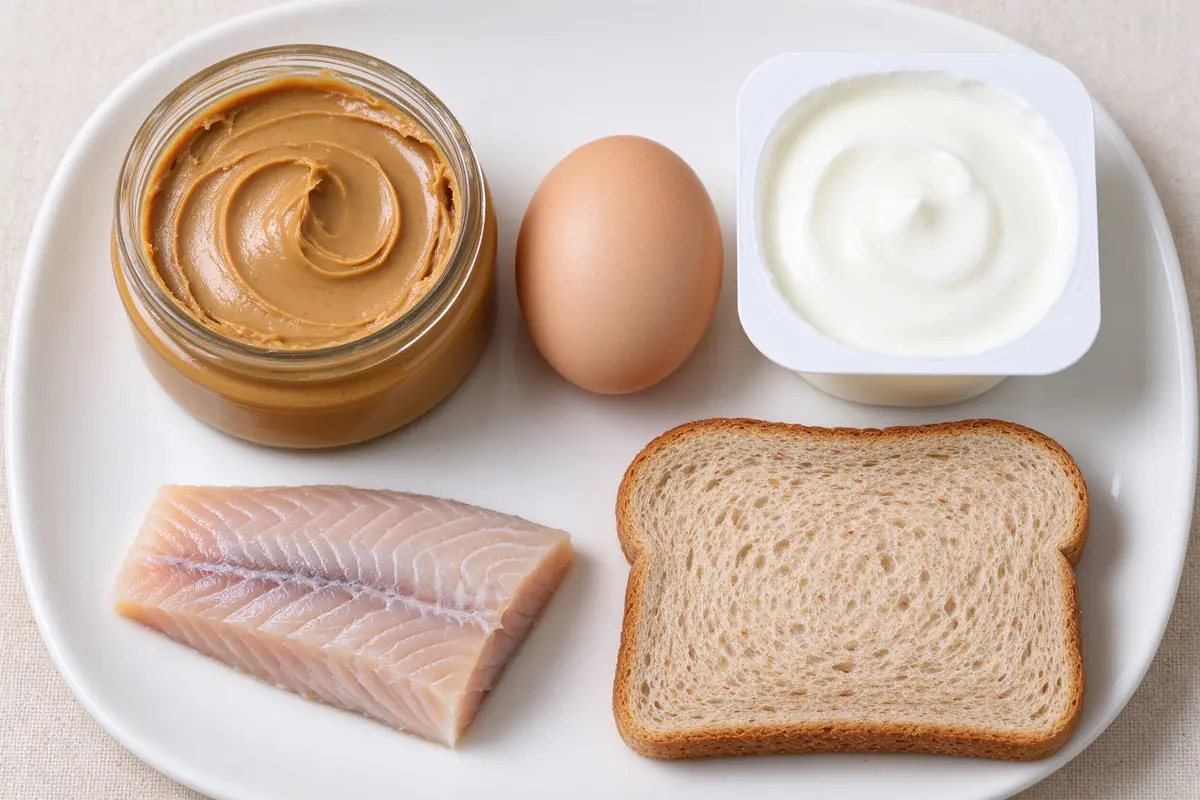
When Should I Introduce Allergens to My Baby?
The AAP recommends introducing allergens: - Between 4 and 6 months, when baby starts solids - Not after 1 year — early introduction prevents allergies - One at a time, wait 3 to 5 days between new foods - Start small: a rice-grain size of peanut butter, a taste of egg Common allergens: 1. Peanut 2. Egg 3. Cow's milk 4. Wheat 5. Soy 6. Tree nuts 7. Fish 8. Sesame The AAP notes that delaying allergens does not prevent food allergies.
What Are the Signs of an Allergic Reaction?
Watch for: - Hives or rash - Swelling of lips, face, or eyes - Vomiting or diarrhea - Coughing or wheezing - Trouble breathing - Lethargy or fussiness Mild reactions (hives, mild rash) can be treated with antihistamine. Severe reactions (trouble breathing, swelling) require emergency care. The AAP notes that most reactions happen within minutes to 2 hours of eating. If baby has a severe reaction, call emergency services immediately.
How Do I Introduce Peanut to My Baby?
The AAP recommends: 1. Mix a small amount of smooth peanut butter (not chunky) with warm water or breastmilk 2. Start with a rice-grain size on the tip of a spoon 3. Wait 3 to 5 days 4. Gradually increase to about 2 teaspoons (10 g) three times a week Do not give whole peanuts (choking hazard). Peanut powder or smooth butter is safest. If baby has eczema or existing allergies, talk to your pediatrician before introducing peanut. For mealtime, keep wipes handy.
Should I Introduce Allergies One at a Time?
Yes. The AAP recommends: - Introduce one new allergen at a time - Wait 3 to 5 days before the next - Watch for reactions - Keep a food diary This helps identify which food causes a reaction. Once a food is tolerated, keep offering it 2 to 3 times a week to maintain tolerance. For more first-food tips, pair with Moni Happy's essentials.
What If My Baby Has a Reaction?
Steps: 1. Stop feeding the suspected food 2. Give antihistamine (if mild) 3. Call emergency services for severe reactions 4. Note the food and symptoms 5. See a pediatrician or allergist The AAP recommends not reintroducing the food until cleared by a doctor. Most babies outgrow milk, egg, and soy allergies by age 5 to 10. Peanut and tree nut allergies are more likely to persist. For more baby care essentials, browse diapers and all products.
Bottom line: Introduce allergens between 4 and 6 months, not after 1 year. Start with a rice-grain size, wait 3 to 5 days between each new food. The AAP says early introduction prevents allergies. Watch for hives, swelling, or breathing problems. Severe reactions need emergency care. Keep offering tolerated allergens 2 to 3 times a week.
Frequently Asked Questions
When should I introduce allergens to my baby?
Between 4 and 6 months, when baby starts solids. Do not wait until after 1 year — early introduction prevents allergies.
How do I introduce peanut to my baby?
Mix smooth peanut butter with water or breastmilk, start with a rice-grain size, and wait 3 to 5 days. Never give whole peanuts.
What are signs of an allergic reaction?
Hives, swelling of lips or face, vomiting, coughing, wheezing, or trouble breathing. Severe reactions need emergency care.
Should I introduce allergens one at a time?
Yes. Wait 3 to 5 days between each new food. Once tolerated, offer it 2 to 3 times a week.