
2026-10-09 · Moni Happy Editorial Team
When Do Babies Start Crawling? Age and Encouragement Tips
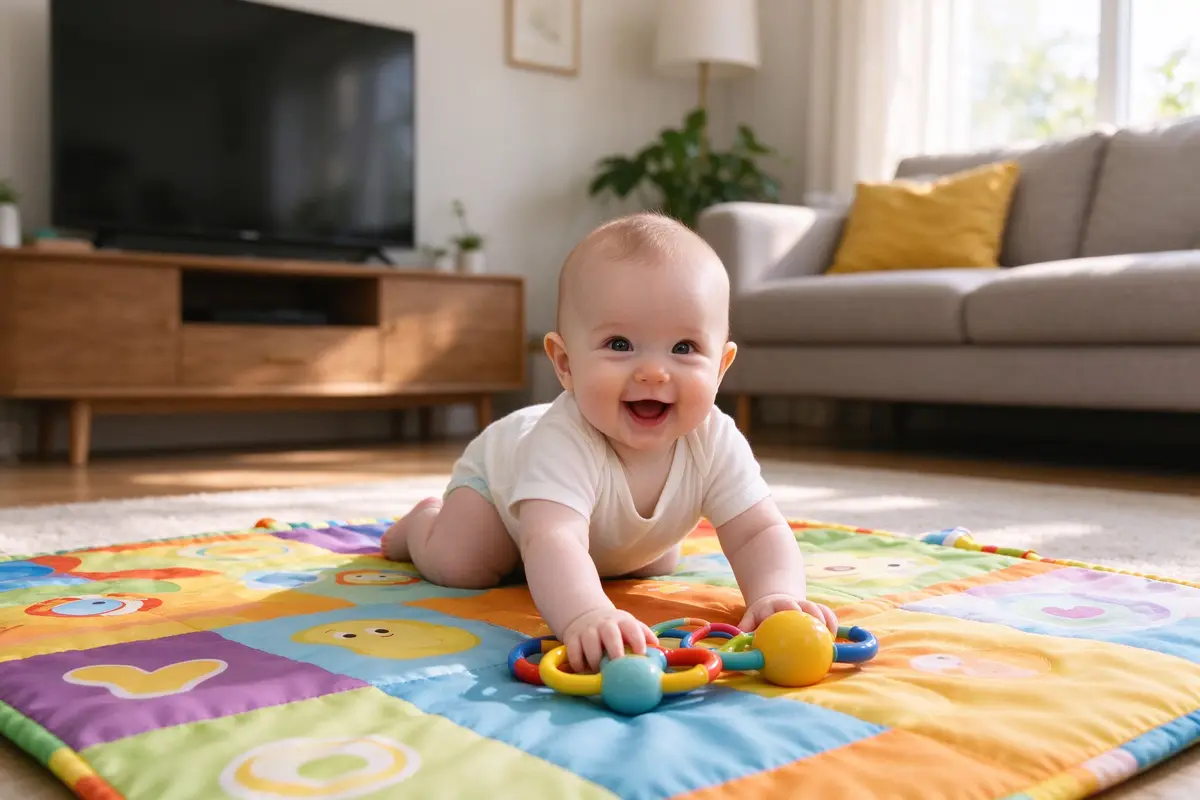
Most babies start crawling between 6 and 10 months, with the classic hands-and-knees crawl appearing around 8 to 9 months. Some babies skip crawling entirely and scoot, roll, or cruise instead — the AAP says this is normal as long as they're mobile.
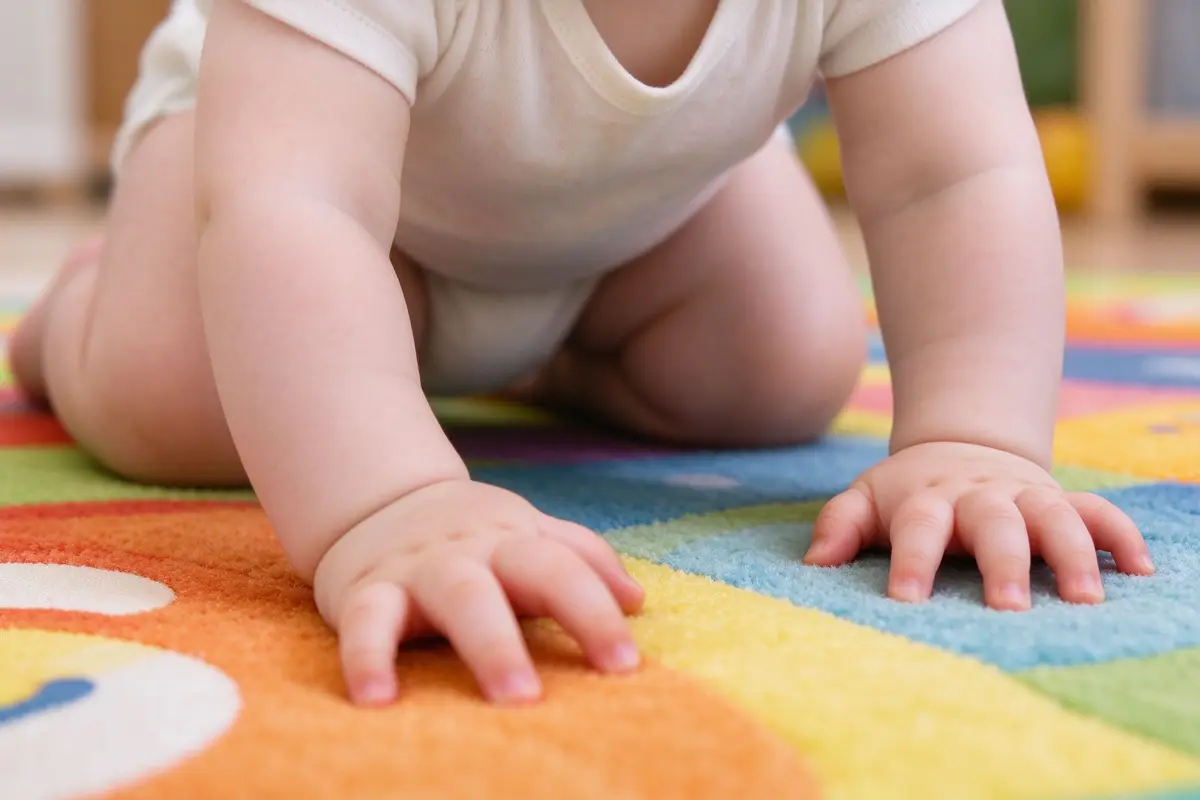
When Do Babies Usually Start Crawling?
Most babies begin some form of mobility between 6 and 10 months. The classic hands-and-knees crawl typically appears around 8 to 9 months. The AAP says crawling isn't a strict milestone — some babies army-crawl, scoot on their bottom, roll, or skip to cruising along furniture entirely. What matters is that your baby is moving and exploring by around 12 months. If your baby isn't moving at all by 12 months, discuss it with your pediatrician.
What Are the Different Types of Baby Crawling?
Normal crawling styles include: - Classic hands-and-knees: most common, around 8 to 9 months - Army crawl: belly on the floor, dragging with arms - Bottom scooting: sitting and pushing with hands and feet - Rolling: using rolls to get around - Crab crawl: hands behind, feet in front The AAP notes that all these styles are healthy. Don't worry if your baby does something unusual — what matters is that they're moving independently. Some babies never do the classic hands-and-knees crawl and go straight to walking.
How Can I Encourage My Baby to Crawl?
Try these strategies: - Give plenty of supervised tummy time starting in the first week - Place favorite toys just out of reach - Get on the floor and demonstrate crawling - Use a soft, clean play mat with space - Limit time in swings, bouncers, and seats (the AAP recommends less than 1 hour per day) - Get on all fours yourself and make it fun Avoid pushing or rolling your baby into position. Let them figure it out. The AAP notes that crawling helps build core strength, coordination, and spatial awareness.
Is It a Problem If My Baby Skips Crawling?
No. The AAP explicitly says crawling is not a required milestone. Research shows that children who skip crawling and bottom-scoot or roll develop normally. Some babies go straight to standing and cruising. What your pediatrician looks for is that by 12 months, your baby is mobile in some way — rolling, scooting, crawling, or pulling to stand. If your baby isn't moving at all by 12 months, or only uses one side of their body, consult your pediatrician.
When Should I Be Concerned About Crawling?
Talk to your pediatrician if: - Your baby isn't mobile in any way by 12 months - They only use one arm or leg to move - They seem stiff or floppy when moving - They lose skills they previously had - They can't sit independently by 9 months The AAP recommends developmental surveillance at every well-child visit. Don't wait for the 12-month checkup — if something feels off, bring it up earlier.
For active babies, stock up on pull-up pants, wipes for clean-up, and more baby essentials.
Bottom line: Most babies start crawling between 6 and 10 months, with the classic hands-and-knees style around 8 to 9 months. Skipping crawling is normal. What matters is mobility by 12 months. Encourage crawling with tummy time, toys out of reach, and limited time in seats. If your baby isn't moving at all by 12 months, see your pediatrician.
Frequently Asked Questions
When do babies start crawling?
Most babies start crawling between 6 and 10 months, with the classic hands-and-knees style around 8 to 9 months.
Is it normal if my baby skips crawling?
Yes. The AAP says crawling is not a required milestone. Bottom-scooting, rolling, or going straight to walking are all normal.
How can I encourage my baby to crawl?
Give plenty of tummy time, place toys just out of reach, limit time in bouncers to under 1 hour per day, and get on the floor with them.
When should I worry about crawling?
If your baby isn't mobile in any way by 12 months, only uses one side, or seems stiff or floppy, talk to your pediatrician.