
2026-10-15 · Moni Happy
Is the Baby Diaper Market Growing in Myanmar?
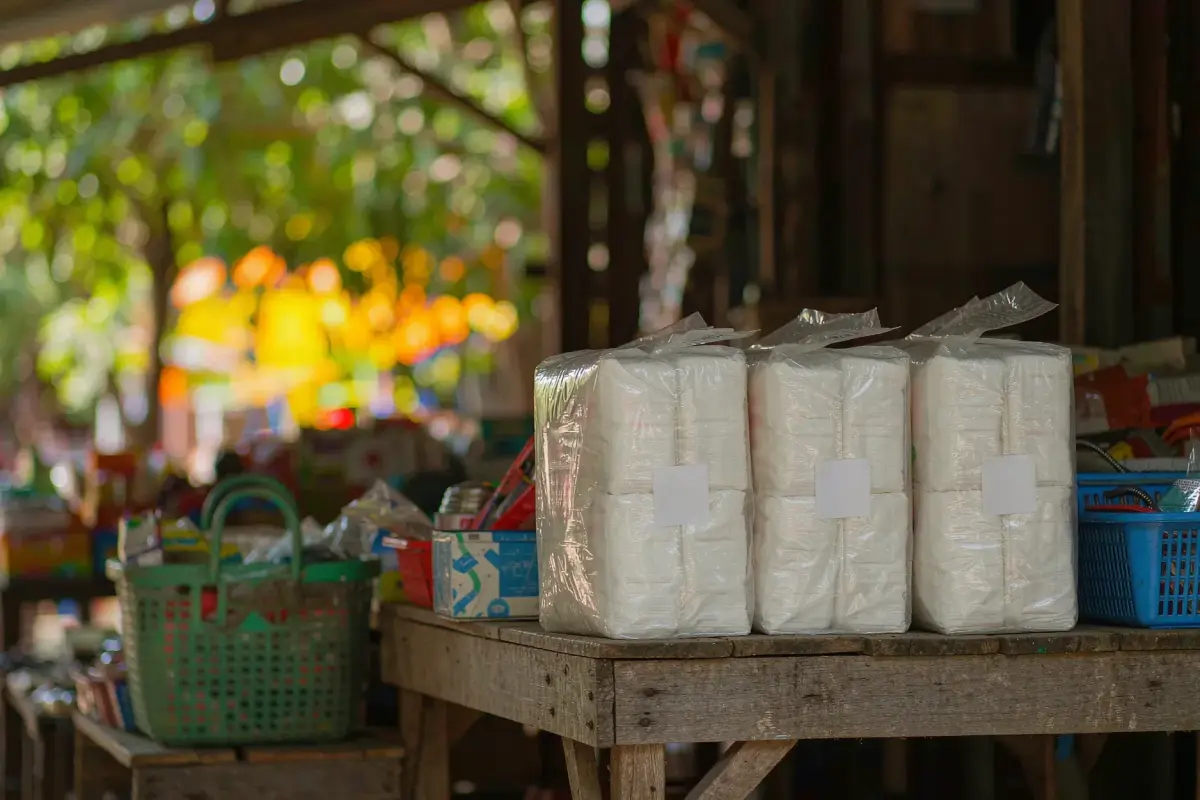
Yes. Myanmar is one of the few Southeast Asian markets where diaper demand still grows in units, not just value: fertility remains near 2.1 births per woman and the crude birth rate is around 16.5 per 1,000 people (World Bank 2024), which across a population of about 54.5 million implies close to 0.9 million births a year. Disposable-diaper penetration also stays low outside the big cities. For a distributor, that combination of a large baby cohort and shallow category penetration is the classic volume-growth profile.
Key facts
- Fertility about 2.1 births per woman and a birth rate near 16.5 per 1,000 (World Bank 2024) - roughly 0.9 million births a year across a population of about 54.5 million.
- About 30% of the population is urban and 24% is under 15 (World Bank 2024), so demand concentrates in Yangon and Mandalay while the cohort stays large.
- Disposable penetration is concentrated in urban households; cloth diapers remain common in rural areas, leaving clear headroom.
- Channels: general trade dominates volume; modern trade, pharmacies and social-commerce selling grow fastest in the big cities.
- Imports run via Yangon and the Thai and Chinese borders under HS 9619; check Myanmar territory availability and apply at moni-happy.com/partner.
What do Myanmar's birth numbers mean for diaper demand?
With fertility near 2.1 and a crude birth rate around 16.5 per 1,000 (World Bank 2024), Myanmar adds close to 0.9 million babies a year. About 24% of the population is under 15 (World Bank 2024), so the baby and toddler base that drives diaper consumption stays large. Fertility is falling, but from a high base, which means the annual newborn cohort remains substantial for years rather than shrinking the way it does in the region's low-fertility markets. Commercially, that is the difference between a market where category volume grows on its own and one where growth must come only from premiumisation.
How developed is disposable diaper use today?
Disposable diapers are concentrated in urban households, particularly in Yangon and Mandalay, while cloth diapers and lower-frequency changing remain common in rural and lower-income segments. Penetration therefore sits well below the mature markets of Thailand or Singapore, and each point of penetration gained converts into recurring unit volume. The practical read for a distributor: the growth runway is long, and the winning position is a trusted, certified brand at an accessible price - not the cheapest pack on a market stall.
Which retail channels actually move diapers in Myanmar?
- General trade and wet markets - still the volume backbone; served by wholesalers and cross-border stock, with price and availability as the deciding factors.
- Modern trade - supermarket chains in Yangon and Mandalay give brand visibility and premium positioning; listings move slowly, so enter with evidence and patience.
- Pharmacies - a natural home for certified, sensitive-skin positioning; the pharmacy playbook is mapped in the pharmacy distribution guide.
- Independent mother-and-baby stores - the fastest launch channel; the independent store playbook covers assortment and reorder routines.
- Social commerce - Facebook-led selling and marketplace listings are significant; treat online as reach and branding while protecting shop prices.
The full channel-by-channel economics sit in the Southeast Asia distribution channels hub, and the neighbouring-market comparisons are in the Thailand and Vietnam market guides.
What should I know about importing into Myanmar?
Diapers enter under HS 9619, with duty and commercial tax applied on import - confirm current rates and documentation with a licensed customs broker before modelling landed cost, and treat any published rate as indicative until verified. Two practical routes matter: sea freight through Yangon, and overland via the Thai border (Myawaddy) or the Chinese border (Muse), each with different transit times, paperwork and risk profiles. Payment typically runs on T/T terms through reputable banks; build FX movement of the kyat into your pricing review, and agree incoterms explicitly - the incoterms comparison and landed cost guide show how each choice moves cost per piece.
Is the market growing in value as well as volume?
Volume leads, but value follows: urban incomes are rising slowly, modern trade introduces premium segments, and certification-led positioning lets a distributor hold price instead of discounting. The premium shift from tape diapers to pull-up pants, and from basic wipes to 99% purified-water wipes, is visible across the region - see the pull-up pants wholesale guide and the wipes wholesale guide. Plan a two-tier range: an accessible core for general trade and a certified premium line for modern trade and pharmacies.
How do I check Myanmar territory availability and apply?
Territory in growth markets is awarded to partners who can execute, not to whoever asks first. Prepare a one-page channel profile - target cities, current retail relationships, monthly volume capacity and team - then submit it through the partner page to check current openings, request pricing and samples, and start the onboarding sequence set out in the first-order onboarding guide. Size the commitment against the startup cost guide and the wholesale price and MOQ guide.
Frequently asked questions
Is the baby diaper market growing in Myanmar?
Yes. Fertility remains near 2.1 births per woman (World Bank 2024) with roughly 0.9 million births a year, and disposable-diaper penetration is still low outside the big cities, so unit volume keeps growing even as incomes rise slowly.
Which cities matter most for diaper distribution in Myanmar?
Yangon and Mandalay concentrate the modern trade, pharmacies and premium independent stores; secondary towns are served mainly through general trade distributors and cross-border wholesalers.
How do diapers usually enter Myanmar?
Sea freight via Yangon and overland routes through the Thai and Chinese borders are both used; diapers fall under HS 9619, and duty plus commercial tax must be confirmed with a licensed customs broker before you model landed cost.
How do I check distributor territory availability for Myanmar?
Territory is awarded to partners with a credible channel plan. Submit your channel profile, target cities and order volume at the partner page to check current openings and request pricing and samples.
Bottom line: Myanmar's diaper market grows on units, not just premiumisation: roughly 0.9 million births a year, fertility near 2.1 and low penetration outside the big cities give a long runway. Enter through general trade for volume and modern trade plus pharmacies for margin, verify duty and logistics with licensed brokers, and check territory availability through the partner programme before committing capital.
Sources and further reading
- World Bank - fertility rate, total (births per woman), 2024
- World Bank - birth rate, crude (per 1,000 people), 2024
- World Bank - total population, 2024
- ASEAN Tariff Finder (HS 9619 preferential tariffs)
Commercial figures are indicative planning ranges and subject to a formal quotation; statutory rates must be confirmed with a licensed customs broker.
Frequently Asked Questions
Is the baby diaper market growing in Myanmar?
Yes. Fertility remains near 2.1 births per woman (World Bank 2024) with roughly 0.9 million births a year, and disposable-diaper penetration is still low outside the big cities, so unit volume keeps growing even as incomes rise slowly.
Which cities matter most for diaper distribution in Myanmar?
Yangon and Mandalay concentrate the modern trade, pharmacies and premium independent stores; secondary towns are served mainly through general trade distributors and cross-border wholesalers.
How do diapers usually enter Myanmar?
Sea freight via Yangon and overland routes through the Thai and Chinese borders are both used; diapers fall under HS 9619, and duty plus commercial tax must be confirmed with a licensed customs broker before you model landed cost.
How do I check distributor territory availability for Myanmar?
Territory is awarded to partners with a credible channel plan. Submit your channel profile, target cities and order volume at the partner page to check current openings and request pricing and samples.
Distributor resources
If you are evaluating suppliers for your market, these are the pages that answer the commercial questions — in the order buyers usually need them.